New Jaxon Smith-Njigba Contract Shows Difficulty Washington 'Millionaires' Tax' Causes For Seahawks
Washington's pending 9.9% millionaires tax could leave Smith-Njigba just $18,414 more than Ja'Marr Chase over six years despite a $7.6M larger contract.
The blaring headline throughout the NFL on Monday was that Seattle Seahawks receiver Jaxon Smith-Njigba became the NFL's new highest-paid wide receiver, passing Cincinnati Bengals receiver Ja'Marr Chase. And those banners were accurate, but only on the surface.
Once we dig deeper and take state income taxes into account, the difference between what Smith-Njigba is going to take home compared to what Chase is going to take home effectively means Chase will still have more money.
Chase will have approximately $156,542,800 after state income taxes are figured. Smith-Njigba will have approximately $156,297,229 after state income taxes. This despite the fact Smith-Njigba's deal is $7.6 million richer.
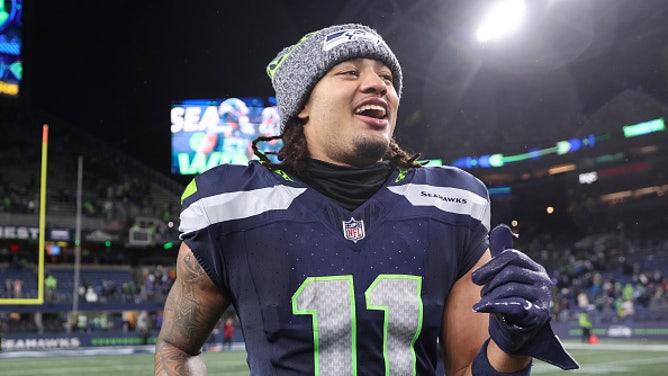
Jaxon Smith-Njigba celebrates big win. (Photo by Steph Chambers/Getty Images)
Red States Taxes Often Lower
The reason for the difference is that Chase, playing primarily in red-state Ohio, is expected to pay approximately $4,457,200 in state income tax on the new money in the contract he signed last year that runs through 2029.
Smith-Njigba, playing in blue state Washington and in a division that includes two annual visits to rivals in blue state California, is expected to pay approximately $12,302,771 in state income tax on the new money in his deal he agreed to this week that runs through 2031.
(The sound you're now hearing is blue state politicians scurrying for their millionaires-are-bad talking points).
Most media think they're comparing apples to apples when NFL contracts are signed in blue states like California, New York and soon, Washington, compared to similar deals signed in red states like Ohio, Tennessee, Nevada, Texas and Florida.
They are not the same.

Nov 8, 2015; Orchard Park, NY, USA; Buffalo Bills head coach Rex Ryan (right) talks with Miami Dolphins owner Stephen M. Ross (left) and Mike Tannenbaum the Dolphins executive vice president of football operations before the game at Ralph Wilson Stadium. Mandatory Credit: Kevin Hoffman-USA TODAY Sports
Athletes Are Rich Tax Targets
The reason is that blue states typically tax the living Brinks truck out of their residents, especially their wealthiest residents, such as professional athletes.
California, home to the Los Angeles Chargers, Los Angeles Rams and San Francisco 49ers, has the highest state income tax rate in the country at 13.3 percent (including a one percent mental health services tax) for salaries above $1 million, which all NFL players with one year of experience make at minimum.
New York, home to the Buffalo Bills, and New Jersey, home to the Giants and Jets, also have progressive state income tax rates that are in the double digits for top earners.
Meanwhile, the red states that are home to the Dallas Cowboys, Houston Texans, Tennessee Titans, Miami Dolphins, Tampa Bay Buccaneers and Jacksonville Jaguars collect no state income tax. Nevada, which President Donald Trump won in 2024, also has zero state income tax affecting Las Vegas Raiders players.
True story: Years ago when Mike Tannenbaum was the Dolphins' executive VP of football operations, his pitch to agents to get their clients to sign always included the phrase "No state income tax."
The same could be true with the Seattle Seahawks because, up until recently, the specter of a state income tax didn't exist in Washington.

SEATTLE, WASHINGTON - NOVEMBER 05: Newly-elected governor Bob Ferguson gives his victory speech at the Washington State Democrats Election Night Watch Party at the Seattle Convention Center on November 05, 2024 in Seattle, Washington. Americans cast their ballots today in the presidential race between Republican nominee former President Donald Trump and Democratic nominee Vice President Kamala Harris, as well as multiple state elections that will determine the balance of power in Congress. (Photo by Alexi Rosenfeld/Getty Images)
Washington Gov. To End Historical Norm?
Washington hasn't had a state income tax since it became the 42nd state in 1889. But Washington's Democrat-run house and Democrat-run senate passed a state income tax bill this month on anyone earning over $1 million per year.
Democrat governor Bob Ferguson has signaled he favors the measure and could sign it into law before the deadline in early April.
Barring a Ferguson change of heart or successful ensuing legal challenges, that would mean the new "millionaires' tax" law begins collecting in 2028. Washington will impose a tax on residents "measured by Washington adjusted taxable income wherever derived."
That will tax personal income over $1 million per year at a rate of 9.9 percent on a significant majority of Seahawks players starting in 2028. That makes Smith-Njigba the most prominent Seattle player with the biggest contract affected by the Democrats' new tax.
Smith-Njigba agreed on Monday to a whopping $168.6 million extension that averages $42.15 million on an annual new money average basis.
That deal surpasses the $161 million extension Chase signed last season that averaged $40.25 million on an annual new money average basis.
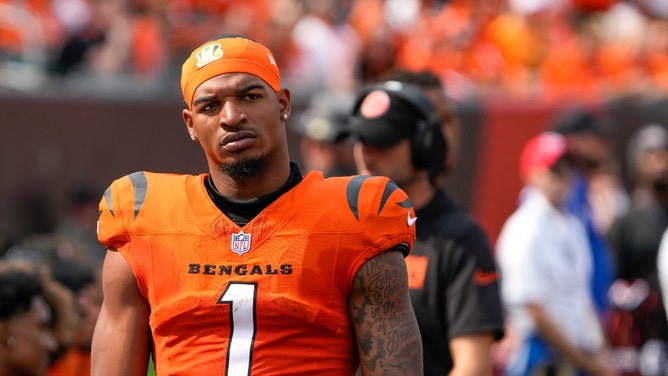
Ja'Marr Chase is fed up with head coach Zac Taylor. Cara Owsley / USA TODAY NETWORK
Chase State Tax Bill $4.5M
The $7.6 million gross new money difference between the two deals is where the headlines about Smith-Njigba beating the Chase deal came from. Except, those numbers won't appear on the Seattle receiver's take-home pay.
The fact Chase plays in a Republican-controlled state is about to reward his wallet because the Ohio legislature, with Republican majorities in both the house and senate, lowered the state income tax rate from 3.5 percent to 3.125 percent in 2025 and this year the state is going to a 2.75 percent flat tax rate for everyone.
No Democrats voted for these Ohio tax decreases.
And what does that mean for Chase?
More of his own money stays with him instead of going to the state in which he lives or states in which the Bengals play road games.
And, yes, the nearly $4.5 million or so in state income tax over five years is a lot. But it is over 2 ½ times less in state income taxes than Smith-Njigba is about to pay.
Per current Washington state law, Smith-Njigba won't pay any state income tax in 2026 or 2027. But he will pay state income tax in other states because he's charged by those states when the Seahawks visit.

SEATTLE, WASHINGTON - NOVEMBER 30: Jaxon Smith-Njigba #11 of the Seattle Seahawks takes a moment prior to a game against the Minnesota Vikings at Lumen Field on November 30, 2025 in Seattle, Washington. (Photo by Steph Chambers/Getty Images)
Smith-Njigba To Pay $12M In State Tax
So Smith-Njigba is paying at minimum $221,108 in state income tax for the next two years and that doesn't include two 2027 away games because the opponent and location have not yet been determined.
When Washington's new law kicks in, the NFL's reigning offensive player of the year will still have four years remaining on a contract that runs through the 2031 season. And over the span of those four seasons that the new "millionaires' tax" is in effect, Smith-Njigba must pay that 9.9 percent state income tax for gross salary every year above $1 million.
The truth is Smith-Njigba is going to find himself in something of a state income tax vortex because the Seahawks play in the NFC West that includes the San Francisco 49ers and Los Angeles Rams. So he's going to be taxed at a higher rate than Washington's rate for those two games. And that's every season.
The Seahawks, by the way, aren't thrilled about the new Washington state income tax. Privately, they dislike it because their state legislature is forcing them to work much harder and dig deeper into their salary structure to pay their players competitively.
General manager John Schneider said recently on his Seattle Sports 710-AM radio show that having no state income tax was a tool his team often used to its advantage.
"I think it is for all the pro teams here in town. It's always been a huge attraction, especially competing with the California teams ," Schneider said. "It's been a big deal for us. So, it's going to sting, from a recruiting standpoint and what that looks like."