Clock Is Ticking On WNBA CBA Talks, And No One Is Budging
WNBA players are demanding a bigger piece of the pie. The league is playing hardball.
The clock is ticking on the WNBA’s collective bargaining agreement. And it’s not looking good.
The current CBA expires Oct. 31, and according to a new report from Front Office Sports, the league and its players appear nowhere close to finalizing a new deal. One source told FOS that a deadline extension is now likely to avoid an immediate work stoppage.
"The players are working diligently to achieve a transformational CBA that builds on the growth, momentum and positive news surrounding women’s sports and the W," WNBPA executive director Terri Carmichael Jackson said.
"As we approach the 60-day mark, the league’s lack of urgency leaves players wondering if it is focused on making this work or just running out the clock. Fans do not want that. They are with the players in demanding a new standard for the W."
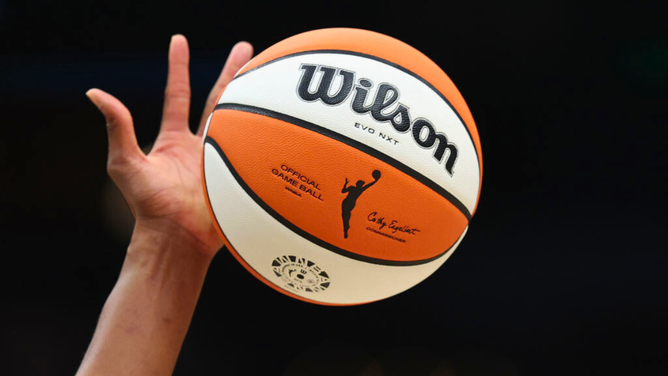
(Photo by Steph Chambers/Getty Images)
That "new standard" includes several major demands from the players: a more dynamic revenue-sharing model, improved benefits, larger rosters and league-wide workplace standards.
But so far, progress has been slow.
During All-Star Weekend in Indianapolis, more than 40 players attended the first face-to-face bargaining session between the league and the union — a meeting that players, including union vice presidents Breanna Stewart and Napheesa Collier, characterized as a waste of time. The league’s revenue-sharing proposal reportedly fell far short of what the players were asking.
The frustration was so apparent that All-Stars took the court for warmups wearing T-shirts that read: "Pay Us What You Owe Us."
WNBA Players Want A Piece Of The League's Growth
The W has changed dramatically since the last CBA was ratified in January 2020.
In the past year alone, the WNBA signed a new 11-year, $2.2 billion media rights deal set to kick in next season. The league also announced three new expansion franchises — in Cleveland, Detroit and Philadelphia — each of which paid $250 million to join the league. Two more expansion teams — the Toronto Tempo and Portland Fire — will begin play in 2026.
Revenue is booming. But under the current agreement, the WNBA salary cap is locked into a 3% annual increase. NBA players, by contrast, receive about 50% of league revenue, and their salary cap rises accordingly. It jumped the maximum 10% ahead of the 2025–26 season.
Priority No. 1 for WNBA players is to move toward a similar structure — one where compensation grows with the business.
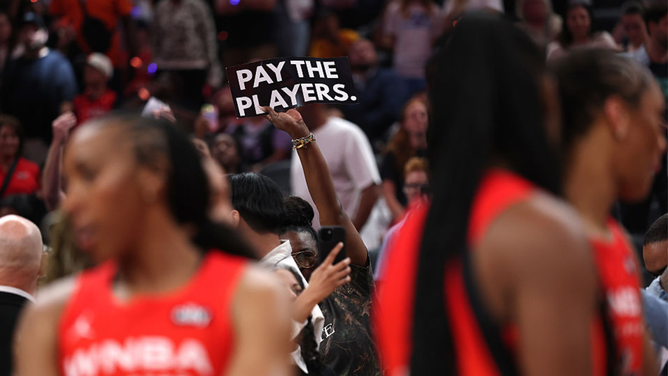
(Getty Images)
So far, though, the league doesn’t seem interested in that kind of flexibility. One of the primary issues at the bargaining table has been the WNBA’s proposal to implement a fixed revenue share, rather than a model that grows with profits.
That’s not sitting well with players who feel like they’ve helped create the league’s recent boom and now want a piece of that pie.
RELATED: WNBA Players Are Asking For More Money — Here's Why It’s Not As Crazy As You Think
If no deal is reached by Halloween, there are a few possible outcomes. A short-term extension could be negotiated to avoid a work stoppage — similar to what happened in 2019, when the two sides agreed to a 60-day extension three days before the deadline.
Another possibility: a strike or lockout. The WNBA has never missed games because of a work stoppage, but the 2003 draft and preseason were delayed slightly by a labor dispute.
This time around, expansion complicates things even further. The WNBA has not yet released rules or a date for the upcoming expansion draft. It legally can’t until a new CBA is in place.
So with just over two months to go, it seems the two sides have reached an impasse.