As CBA Deadline Looms, WNBA Players Dig In, Send Clear Message At All-Star Weekend
More than 40 WNBA players met with league leadership in Indianapolis to negotiate a new CBA. The meeting ended without progress and with growing talk of a work stoppage.
INDIANAPOLIS – CBA negotiations have become the biggest story at WNBA All-Star Weekend. And frankly, it's not even close.
On Thursday, more than 40 players — ranging from longtime veterans to young stars like Caitlin Clark, Angel Reese and Paige Bueckers — met face-to-face with league leadership to discuss the terms of a new collective bargaining agreement (CBA). The meeting lasted more than two hours. It ended with no progress, no deal and a whole lot of frustration.
Shortly afterward, the WNBPA released a statement calling the league's current proposal "unsustainable" and promising to "stay committed to the fight."
The current CBA, of which players opted out last fall, officially expires at the end of October. And with little movement and a widening gap between the two sides, mentions of a potential work stoppage have begun circulating in Indianapolis.
Players' Association: WNBA Offer Was ‘Nowhere Near What We Asked For'
Napheesa Collier, a veteran forward for the Minnesota Lynx and Vice President of the WNBPA, didn't sugarcoat what players thought of the league's offer.
"Yeah, we were disappointed for sure. What they came back with is just nowhere near what we asked for. Or even in the same conversation," Collier said. "Like we asked for something, they came back with something totally different."
While Collier said she couldn't disclose exact numbers, the two pillars of the players' demands are clear: salary increases and revenue sharing.
"That was what we had first sent them even back in February," she said. "These are our two main points. And we've been really clear on that from the beginning."
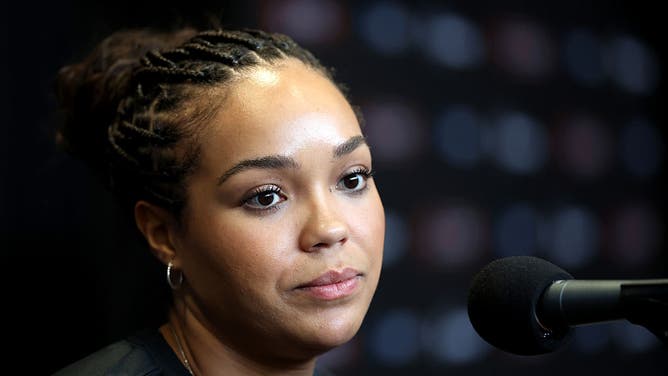
WNBPA Vice President Napheesa Collier says players will not budge when it comes to higher salaries and revenue share.
(Photo by Steph Chambers/Getty Images)
Under the current framework, WNBA players receive 9.3% of total league revenue, according to Market Watch. For reference, NBA players get approximately 50%. WNBA players want more, and they've made clear they aren't budging — even if that means a work stoppage.
The WNBA has seen unprecedented growth in the past two years. So for the players, this is about more than salaries in the short term. It's about a share in a future that finally looks bright.
"I mean, we're on a time crunch, right? Like, no one wants a walkout. That is not what anybody wants. But at the end of the day, we have to stand firm, and we're not going to be moving on certain topics," Collier said. "Hopefully the league comes back quickly, so that we can have more dialogue, more conversations, and we can get the ball rolling."
Angel Reese: ‘We Aren't Getting What We Deserve'
Reese, now in her second season with the Chicago Sky, is new to CBA negotiations.
"Yesterday's meeting really woke me up to the eyes of, we aren't getting what we deserve," she said after practice on Friday. "Over the past year, the numbers they were giving us — I'm like, wow. I didn't know all this stuff. Now being informed and growing, I can be more vocal, because I do know more."
She added: "We're not going to stop until we get exactly what we want."
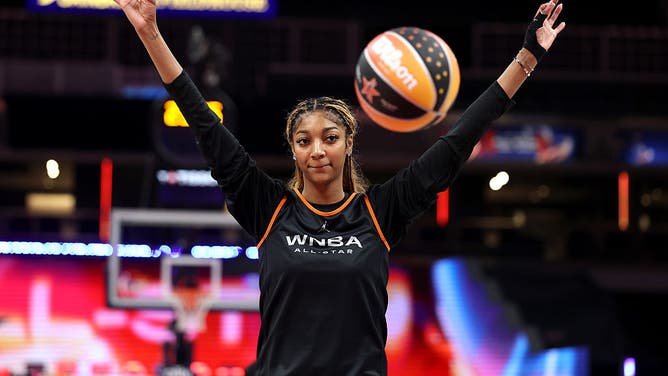
Angel Reese says Thursday's CBA negotiations were eye-opening.
(Photo by Steph Chambers/Getty Images)
Reese said it was powerful to sit alongside younger players like Paige Bueckers, Kiki Iriafen and Sonia Citron and think about how this agreement will shape not just their own careers, but also those who follow.
"They show us the numbers from 2026–27. They don’t show you 2030–31," Reese said. "My mom told me when I was younger, they'll show you the money here. But what about the longevity of it, the players that are coming after us, next year's players?
"Obviously, girls' basketball is skyrocketing, and it's important for us to get what we want now, but not just now —for the future as well."
Players Say WNBA's Initial Offer Was ‘A Slap In The Face'
New York Liberty guard Natasha Cloud didn't hold back when asked how the meeting went.
"I think what was presented is just a slap in the face," Cloud said. "We're going to continue to push for everything that we've earned. And I think the word 'earned' is something that needs to be highlighted. A lot of times, we get told to just continue to take crumbs and be thankful for what we have, and that's just not the case anymore."
Cloud said the league is growing too fast for old ways of thinking.
"We understand basic economics. We understand business models," Cloud said. "We understand exactly where this league is and where this league is heading. And so we're just going to continue to push for everything that we deserve."
She acknowledged that negotiations are adversarial by nature.
"We're on two separate teams when it comes to negotiating. While we want to move the W forward, we're not going to be holding hands through the CBA," she said. "Like we're fighting for what we're due and what we're worth, our value. And they're going to be fighting for what they think protects the business."
Reese echoed the same sentiment.
"Don't get it twisted. Like, yeah, we're basketball players, but we're still doing business. The business side of things — we want our share. We want what we deserve," she said. "We came in there on business. Everybody was dressed to impress. Everybody came in there with knowledge. Everybody knew what they were talking about."
Collier added: "Players have more power than ever in the history of women's sports right now. And I think we know that."
Let's Look At The Numbers
The players say they're looking forward — not backward. The WNBA has long been criticized for never turning a profit in its 28 years of existence. And that's a completely fair criticism. But that’s not the world they’re operating in anymore.
The league just secured a $2.2-billion media rights deal, attendance is up 26% year over year, and merchandise sales are surging. Sponsor money is flooding in. New expansion teams are on the way. And players like Clark and Reese are driving record-breaking fan engagement.
RELATED: The WNBA Is Growing Fast — But Is It Fumbling Its Biggest Marketing Opportunity?
Yet the current salary cap hovers around $1.5 million per team, and max contracts remain just north of $250,000.
Players say they want a revenue-sharing model that reflects the future of the league, not its past.
Because This Ain't Your Mama's WNBA
And if anyone would know, it's Cheryl Reeve. The Minnesota Lynx head coach began her WNBA coaching career in 2001. So she's seen every phase of the league's growth and now, she says it's reached a fork in the road.
More specifically, Reeve called this moment "a natural evolution of a professional sports league."
"These young players are growing up at a different time, and they're understanding their worth in ways that we couldn't early on," Reeve told reporters on Friday. "There's just so much more at stake financially. And they're ready to work hard to get what they think they're worth."
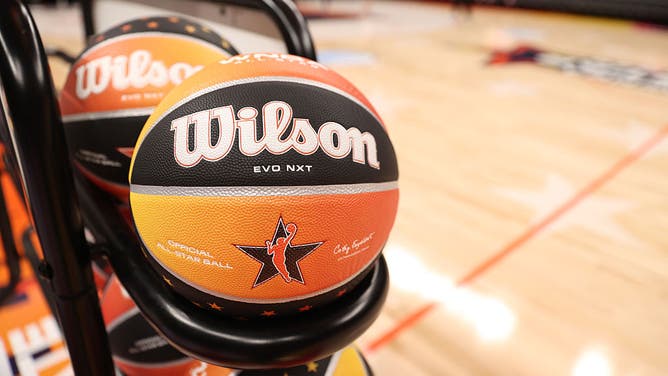
WNBA All-Star 2025 Practice Sessions take place at Gainbridge Fieldhouse in Indianapolis.
(Photo by Stephen Goslling/NBAE via Getty Images)
Commissioner Cathy Engelbert is scheduled to speak with the media on Saturday before the All-Star Game. She will undoubtedly be asked about the state of negotiations, the league's position on revenue sharing and whether a lockout is truly looming.
This weekend is a celebration of the league's growth and its star power. But the elephant in the room couldn't be more obvious. With both sides digging in with the current agreement set to expire in just a few months, the question isn't whether the players are serious. It's how — and when — the league will respond.