Unrivaled Is Selling A Story But Numbers Suggest A Sad Ending
The league is down 44 percent from last year despite a Nielsen methodology change that is boosting nearly every other sports league.
The women’s professional 3-on-3 basketball league Unrivaled is nearing the end of its second season. We’ll forgive you if you didn’t know that because, based on the TV audience, almost nobody does. A major reason for that is that the biggest star (by a mile) in women's basketball, Caitlin Clark, doesn't compete in the league.
Unrivaled was pitched as the next step in the inevitable rise of women’s basketball, a premium offseason product backed by real money and a real network partner. The problem is that premium products need premium demand. Instead, Year 2 has produced a year-over-year audience drop that looks like the novelty is wearing off, and it wasn't all that high in the first place.
If you’ve only consumed left-wing media, which tends to act like cheerleaders or PR agents for things it wants to be successful, you probably don’t realize how bad the numbers are. The same outlets that swear women’s basketball is bigger than one star have been lapping up the league’s press release talking points without asking the only question that matters: how many people are actually watching?
Because in sports, there is no spin powerful enough to overcome a lopsided deficit on the scoreboard.
Viewership Problem Unrivaled Can’t Out Spin
Sports Media Watch reported that Unrivaled was averaging 103,000 viewers across TNT and truTV through week three of the season as of Jan. 26, down 44 percent from the first three weeks of last year when it averaged 185,000 viewers.
That 44 percent drop is even worse than it looks on paper because Nielsen has been changing how it counts audiences in ways that generally help sports. The data-collection company has rolled out its Big Data plus Panel measurement and expanded national out-of-home measurement, meaning more viewing in bars, restaurants, and other communal settings is being captured.
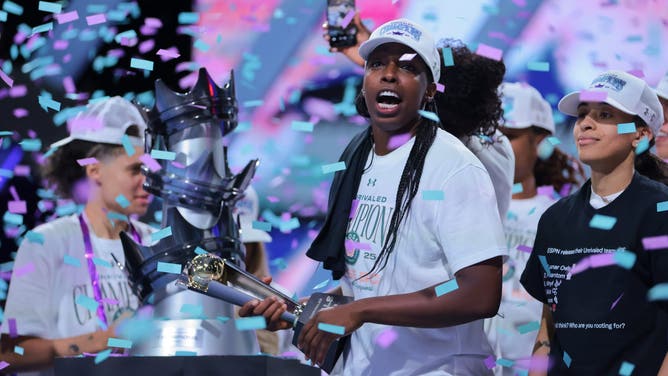
Unrivaled’s second-season TV viewership is down sharply, raising questions about whether a premium women’s 3-on-3 league can sustain demand beyond launch buzz.
(Sam Navarro/Imagn Images)
Nielsen has promoted the updated methodology as a more accurate view of audiences, which generally benefits live sports that people often watch outside their living rooms. Nearly all sports programming has seen an increase in TV ratings since the change.
Not Unrivaled, though. In fact, it's exactly the opposite.
While the industry is literally improving its ability to count sports viewers, Unrivaled is hemorrhaging the small audience that it had in its first season. People likely tuned in because it was new and curiosity is a powerful driver. But take away the novelty, and what's left? It's like the Harlem Globetrotters except the players are far less skilled and less athletic.
Big Valuations and Big Headlines Don’t Equal Big Demand
Of course, you would not know any of that if you only read the glowing coverage from the left-wing media cheerleaders. When the league drew 21,490 fans for its Philadelphia tour stop, ESPN ran with players raving about the record crowd. By the way, good for Unrivaled that it sold out an NBA arena for one night. That's really cool. But, again, we're back to the novelty aspect.
Same thing with money talk. ESPN amplified the league’s announced $340 million valuation after its inaugural season. The league’s own press release called the Series B oversubscribed and described the valuation as a milestone.
Those headlines are great for investors and sponsors and the people selling the story. If the TV ratings say almost nobody knows this league exists, the valuation is just a nicer way of saying the business still depends on belief. And it's a business that prides itself on shelling out money at every turn, making return-on-investment even tougher.
Now comes the part the PR coverage never wants to touch. If the business is real, then the business has to hold up under the rules that apply to every other sports league. Unrivaled can create a few headlines with a tour stop, and it can raise money at a glossy valuation (by investors who like being associated with a women's basketball league because it gives them extra social currency).
But none of that changes the fact that a league lives or dies on recurring demand, and demand is what TV measures better than anything else.
Media Partners Don’t Care About Narratives
The league found a media partner, and a major one, with TNT Sports. TNT didn't just agree to carry Unrivaled games, either. Warner Bros. Discovery (TNT's parent company) announced the partnership as a multi-year media deal across TNT and truTV with all games streamed on Max, and it also said TNT Sports would be an equity partner. Warner Bros. might like the positive PR that it gets from taking a risk on startup women's basketball league, but eventually, good PR doesn't override low viewership.
Front Office Sports has reported that Unrivaled’s media rights deal is six years and reportedly worth nine figures, but it includes an opt-out after three years (which is after next season). If viewership keeps slipping, sponsors do what sponsors always do. They stop supporting and start negotiating. The ad guys don't care about mission statements; they care about eyeballs, demos, and where they trim the budget.
And the TV partner is the same way. Warner Bros. Discovery can call it a partnership, call it a movement, call it whatever it wants. At the end of the day, it's a corporation paying for content. If the audience is not there, the check shrinks.
This isn't about ideology. This is about economics.
The people writing the glowing profiles never write about that part because it ruins the story. It forces them to admit Unrivaled is not competing against some imaginary patriarchy. It is competing against everything else on television plus the simple fact that most sports fans do not care enough to watch women’s 3-on-3 basketball in January on truTV.
Sure, they may pack an arena here and there because what else is there to do in the northeastern United States in the winter? But that's not a sustainable business model for a league with the aspirations that this one keeps clamoring about.
Unrivaled is selling a story. The numbers tell you how many people are buying it. Right now, the answer is not enough.