Is MLB Regular Season Success Entirely Derived By Money And Market Size?
Dodgers and Yankees lead wins since 2013 but smaller market teams like Guardians, Cardinals crack top five
It's easy to point to money as the only necessity for success in Major League Baseball. After all, the Los Angeles Dodgers are back-to-back champions, and the Yankees were dominant in the late-1990's.
The Dodgers led the league in payroll in 2025, though the fact that they didn't in 2024 was conveniently ignored by opposing fans. They have top level talent, in part because of their spending. Though they've supplanted it with contributions from cheaper homegrown players and targeted low-level acquisitions.
RELATED: No, The Dodgers Didn't Buy A World Series, And Here's The Proof
But one of the easiest, simplest ways to look at the importance of payroll and market size is to look at regular season success over a larger sample size. Why? Because the World Series is a playoff series, and every series is heavily influenced by randomness, variance, and luck. Over the course of a 162-game season, or more importantly, a multi-year sample, those factors are more likely to even out.
So what do the results look like, when examining a longer sample size, one that isn't overwhelmed by recency bias?
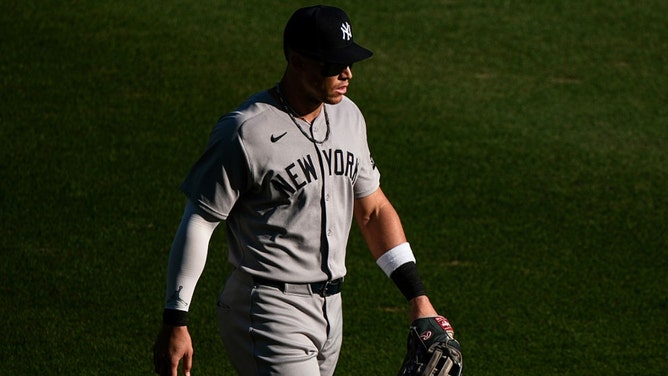
NEW YORK, NY - JULY 05: Aaron Judge #99 of the New York Yankees takes the field during the game between the New York Yankees and the New York Mets at Citi Field on Saturday, July 5, 2025 in New York, New York. (Photo by Michael Mooney/MLB Photos via Getty Images)
Money, Market Helps, But It Isn't The Only Thing That Matters
Codify Baseball posted on X this week a list of the most successful teams in the regular season since 2013. And while there have been successful large market, big-spending teams, there's also been plenty of success coming from smaller market and lower team payrolls. And failure from other big spending teams.
The Dodgers and Yankees make sense. But the Cleveland Guardians rank third, despite running low payrolls and playing in a small market. The Cardinals too, rank fifth, despite a small market and mid-tier payrolls. Tampa is in the top-10, despite low payrolls and the Tampa market.
The New York Mets play in the biggest market, yet rank in the middle for most successful franchise. Other big market teams that have struggled include the Phillies, Rangers, Angels, Nationals, Diamondbacks and White Sox.
Team | Wins | Nielsen DMA Rank (2024–25) |
LAD | 1222 | 2 |
NYY | 1128 | 1 |
CLE | 1101 | 19 |
HOU | 1097 | 6 |
STL | 1080 | 24 |
BOS | 1066 | 9 |
TB | 1065 | 11 |
ATL | 1062 | 7 |
MIL | 1060 | 38 |
CHC | 1047 | 3 |
TOR | 1027 | N/A (Canada) |
SEA | 1025 | 13 |
NYM | 1014 | 1 |
SF | 1006 | 10 |
WSH | 986 | 8 |
PHI | 985 | 5 |
SD | 972 | 30 |
MIN | 968 | 16 |
ATH | 967 | 10 |
TEX | 963 | 4 |
ARI | 957 | 12 |
BAL | 954 | 29 |
LAA | 951 | 2 |
PIT | 949 | 27 |
KC | 937 | 33 |
DET | 935 | 14 |
CIN | 926 | 37 |
MIA | 878 | 18 |
COL | 863 | 17 |
CWS | 862 | 3 |
There are differences with postseason success, but the best way to give yourself a chance to win a World Series is to win the most regular season games. More playoff appearances, more opportunities for the bounces to go your way. Market size helps, payroll helps, but sustained success is clearly not entirely dependent on those factors.
The Padres, despite playing in one of baseball's smallest markets, have won almost the same number of games as the Phillies and Nationals. But haven't won a World Series in that time frame, so they're not viewed as the success they've been.
There's no one way to win in baseball. Money obviously helps. But using market size as an excuse simply isn't reasonable.