Precedent Suggests Rashee Rice Should Be Suspended No More Than 6 Games
Kansas City Chiefs wideout Rashee Rice is set to become just the second player to have his disciplinary case heard by Judge Sue L. Robinson.
The NFL and NFLPA ratified the current collective bargaining agreement (CBA) in 2020, appointing retired federal judge Sue L. Robinson as the independent arbiter in disciplinary cases where the two sides cannot agree. Since then, Deshaun Watson has been the only player to take his case before Judge Robinson.
Kansas City Chiefs wide receiver Rashee Rice plans to be the second. On September 30, Judge Robinson is scheduled to preside over a disciplinary hearing stemming from Rice’s involvement in a multi-vehicle crash in 2024.
Rice's case is complicated by the NFL apparently wanting to make an example out of him. According to NFL Network insider Tom Pelissero on Friday, the league initially proposed a 10-game suspension earlier this summer. For context, suspensions of that length have only been imposed in cases involving gambling or sexual harassment/assault. In fact, ESPN's Adam Schefter suggested on Tuesday that the league had already reduced its proposal to eight games.
Kansas City Chiefs wide receiver Rashee Rice was driving nearly 120 miles per hour seconds before a crash last month in Dallas, according to his arrest affidavit.
On Monday, 810 WHB’s Jason Anderson reported that the NFLPA plans to argue precedent: in 2023, the league suspended Brandin Echols just one game after he pleaded guilty to fourth-degree assault by auto in a crash that left a man partially paralyzed.
The NFLPA may also point to Jordin Addison, who was suspended three games this month following a DUI charge—his second driving-related incident since 2023.
Now, there's an argument that Rice deserves a longer suspension because he fled the scene. However, it is difficult to argue that he deserves 10 times as many games as Echols or three times as many as Addison.
Which brings us back to Judge Robinson.
In 2023, she suspended Watson for six games after the NFL sought a full-season ban. The league appealed her ruling, and the sides ultimately settled on an 11-game suspension—a middle ground between Robinson’s decision and the NFL’s original proposal.
For perspective: more than 20 women accused Watson of sexual misconduct during massage therapy sessions. Rice, by contrast, was racing at 119 mph when he crashed into multiple vehicles. The NFL has already signaled that it considers Watson’s case more severe, as reflected by its (slightly) lighter proposal to Rice.
Rice’s camp hopes Judge Robinson will also see it that way, rule for fewer than six games, and force the league into a settlement. Perhaps she will.
Granted, six games is the baseline suspension under the NFL’s Personal Conduct Policy. The league can then apply "mitigating" or "aggravating" factors. But because the NFL is so notoriously inconsistent in doing so, an independent arbiter is mostly likely to default to the CBA standard of around six games – as Robinson did in Watson's case.
So, whether Robinson rules four games for Rice and the NFL tries appealing to six, or she rules eight games and Rice/NFLPA try appealing to six – logic suggests Rice ends up serving around six games.

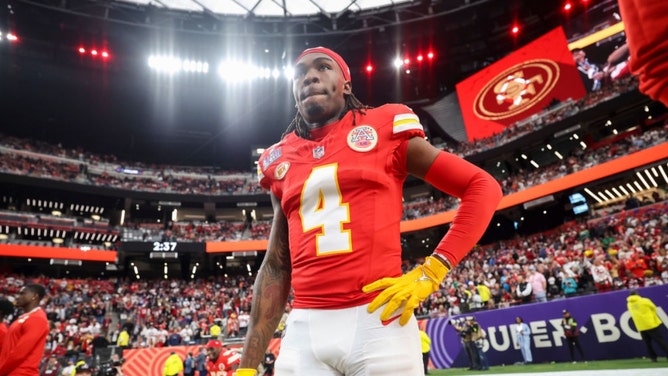
(Rashee Rice. Photo by Todd Kirkland/Getty Images)
In theory, the two sides should be able to agree on a suspension of that length before the Sept. 30 hearing. Put bluntly, neither side benefits from taking this case before a judge.
Since Pelissero’s initial report, the NFL has faced heavy criticism for overreaching and implying Rice’s conduct was on par with Watson’s. Meanwhile, Rice risks losing late-season and even postseason games the longer this lingers. In truth, a five-game suspension would have been a reasonable compromise weeks ago. Yet here we are.
Finally, it doesn't help that the NFLPA is in a state of chaos. The NFL likely feels it can better exert its power over the union than during previous negotiations. Conversely, the NFLPA may feel pressure to prove to players that it can stand up to the league and avoid setting a precedent for harsher suspensions.
Egos on both sides could drag this out far longer than necessary. In the meantime, Rice remains eligible to play until his suspension is finalized.