Was Notre Dame Planning On Backing Out Of SC Rivalry All Along?
Marcus Freeman previously said the rivalry was 'good for college football' but Irish declined multiple USC proposals
It's still yet to sink in that the historic rivalry game between the USC Trojans and Notre Dame Fighting Irish won't be played until 2030 at the earliest. The game, which started in 1926, has been played virtually every single year since, outside World War II and the COVID lockdown shortened 2020 season.
But a stunning press release just last week announced that the two sides had not come to an agreement to continue the rivalry in 2026. In the aftermath, Notre Dame fans have blamed USC, because the Trojans wanted to move the game to earlier in the season. They've also highlighted some comments from SC head coach Lincoln Riley that were interpreted as wanting to end the rivalry. Riley's remarks, that the program could look at any scheduling changes in order to make the playoff, have fueled criticism that he didn't want to continue playing the Irish.
Then there's the other side of it. Notre Dame head coach Marcus Freeman said just a few months ago, that he'd be happy to play SC at any point in the season. Early on, middle part, end of the year, he didn't care. The rivalry is "good for college football," he said, so the game should continue, regardless of how it fit into the schedule.
RELATED: Notre Dame Lied About Wanting To Keep USC Rivalry Going
When presented with the opportunity to follow through on that statement, the Irish declined. As negotiations continued, USC offered an extension, initially to play the 2026 game in LA in November. Then to play the game in Week 0. The Irish said no, at which point their fans and some Trojan personalities rushed to blame the SC administration for the Irish not living up to their public remarks.
But it's not just the fact that Notre Dame didn't actually want to play the game anytime, anywhere that's suggestive of which side wanted to back out. There's even more to it.
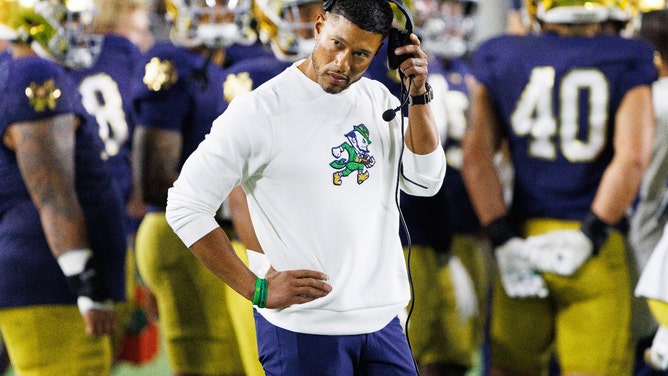
Notre Dame head coach Marcus Freeman on the sidelines during a recent home game for the Irish. MICHAEL CLUBB/SOUTH BEND TRIBUNE / USA TODAY NETWORK via Imagn Images
Notre Dame Had Replacement Lined Up Immediately
Part of the disagreement between the two sides stemmed from Notre Dame's unique arrangement with the College Football Playoff. Reaching the playoff has become the ultimate goal for every top program, with huge, multi-million dollar bonuses at stake that have become all but a necessity in the age of paying players.
Despite what the committee has said publicly, wins and losses still matter the most. Unless you play in the SEC and your name rhymes with "Palabama." Then you can get blown out and humiliated by another team and take advantage of the SEC Championship Game being a fun, expensive, exhibition.
Both sides realize this, that winning 10 games is the best way to put yourself in a position to reach the playoff. For Notre Dame, that's become a literal guarantee. Take this season, for example. The Irish's best win was over USC, and the dominance they showed against lesser competition got them to 10 wins and No. 11 in the final playoff poll. In 2026 and beyond, that would mean a guaranteed spot in the field.
But the win over USC wasn't enough to overcome two losses. And it's clear that the Irish administration, thanks to its unique relationship with the committee, has realized that there's little benefit to playing SC and building a tougher schedule. Why take any chances? They already have the built-in advantage of not having to play a nine-game conference schedule, year in and year out. They don't have to go on long trips, with their beneficial location in the Midwest allowing for short flights to most games, outside the SC and Stanford rivalries. They don't have to worry, as BYU did this year, about losing a conference championship game and being eliminated.
And if the selection process punishes losses more than it rewards wins, outside certain favored conferences, why take the risk? Notre Dame could simply schedule anyone, win enough games, and get to the top-12.
What drives this point home isn't simply that the Irish backed out after saying they didn't care about time of the season. It's that they had a replacement lined up immediately. Almost simultaneously with the release ending the SC rivalry, Notre Dame announced they'd added a game against BYU for 2026.
With the time and back-and-forth negotiation that takes place to schedule a game, it's a near-certainty that the Irish had been having side scheduling conversations with BYU prior to the SC arrangement falling apart. Why would they do that, if they were so committed to continuing the rivalry?
Meanwhile, USC still hasn't announced a new opponent, indicating that they always hoped and intended to continue the game. And that's with a schedule in 2026 that includes Ohio State, Indiana, Oregon, Penn State and Washington. Three playoff teams and the top three teams in ESPN's FPI ratings.
Again, much of the blame has fallen on USC, because the Trojan side asked for changes. But those changes made sense for SC, and should have made little difference to Notre Dame. Not only because the Irish said they made no difference, but because they don't have a conference schedule to worry about. SC's compromise to its new Big Ten reality and desire to have a realistic path to the playoff was to ask to move the game to earlier in the year. What compromise was Notre Dame willing to make? Nothing. What concessions were the Irish willing to give in the negotiation? Nothing. Just like they did with a bowl game this year, they took their ball and went home.
And that, along with the immediate BYU announcement, shows that they had one foot out the door all along. There's little reward for the Irish for playing a tough schedule if they lose three games. There are even rumors that they intend to cancel the Stanford rivalry, since traveling to the West Coast every other year might present an unnecessary risk. Their only goal is to win 10-11 games and guarantee themselves the massive financial reward of a playoff appearance.
SC doesn't need the Irish to have a tough, playoff-caliber schedule. The Trojans wanted to play the game anyway, even if it potentially cost them a spot. The Irish don't need to play SC, in fact, wouldn't want to play SC, in order to enjoy the benefits of having a weak schedule and playoff-caliber ranking. They negotiated with BYU behind the scenes. They didn't follow through on their word. They refused to make even the slightest compromise. And somehow that's USC's fault.