Jemele Hill, Michelle Beadle And Elle Duncan Predictably Turn Russini Mess Into Gender Grievance
Hill, Beadle and Duncan defaulted to the easy angle, reframing a straightforward issue of integrity as a debate about gender.
Dianna Russini and Mike Vrabel’s tryst in Sedona produced one hell of a week in sports.
In just a few days, photos surfaced via Page Six, both parties denied any extramarital relationship, and Russini stepped away from her role at The Athletic, as announced on Tuesday.
Whatever actually happened in Sedona has raised unavoidable questions about credibility and whether a reporter crossed a line that should never be blurred. The situation with Russini and Vrabel raised a clear conflict of interest regarding journalistic integrity.

NFL reporter locks fingers with NFL coach (both married), via NY Post.
Instead of addressing that directly, some of the loudest voices in sports media, mostly women, have tried to redirect the conversation.
The Atlantic's own Jemele Hill delivered a wild, head-scratching take:
"I’ll say this: While the photos raised questions, if male insiders were held to a similar standard of ethics, none of them would exist."
READ: Dianna Russini Resigns From The Athletic; What's Next?
OutKick founder Clay Travis responded by arguing that Hill’s comparison falls apart, noting that this kind of dynamic is not something male reporters typically face in a male-dominated industry.
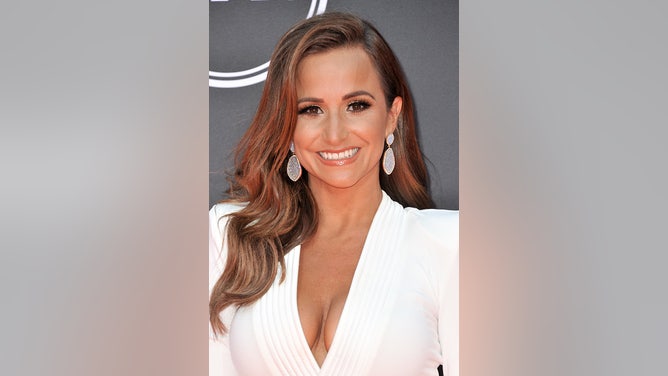
Dianna Russini attends the 2019 ESPY Awards at Microsoft Theater on July 10, 2019, in Los Angeles, California. (Photo by Allen Berezovsky/WireImage)
In the Russini case, access may have been influenced by personal leverage in a way male reporters typically cannot match.
Travis said, "Lots of gay sex (allegedly) in the NFL insider community. (No surprise here, but Jemele is really bad at analyzing different fact patterns and making analogies and arguments based on them.)"
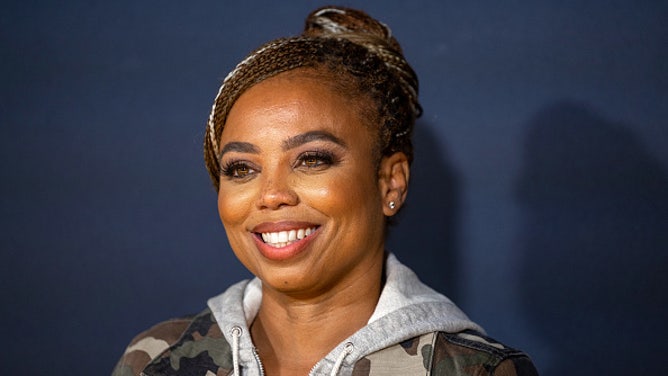
Sports journalist Jemele Hill. (Photo by Amanda Edwards/Getty Images)
Michelle Beadle also weighed in on her podcast, essentially telling the public to stop caring about the truth:
"I love Dianna… I don’t want to hear ‘journalistic integrity.’ Stop. Just stop… Poor decisions were made; we’ve all made them… There’s also a lot of misogyny in how this is being covered. She’s got her job on the line; he doesn’t have his job on the line."
Elle Duncan, no stranger to benefiting from industry bias, also weighed in on the Russini news without demanding accountability.
She also brought up "DEI hires" as if that criticism has never existed in any real sense.
"Hi quick PSA - pls stop saying the 'credibility of all women' is in jeopardy cause **insert** the story of one woman who may or may not have done whatever headline is out there. If you’re dense enough to equivocate the actions of one to all, you’re probably a sexist who was looking to dismiss a woman’s career trajectory anyway. This is not new and we’ve ALL had ppl at some point in our career reduce us to a DEI hire, a hot girl hire, or a sleeping around hire. OLD TRICKS! Don’t fall for it."
One person’s actions should not be used to define an entire group.
That should be obvious.
But that is not what this criticism is about; rather, it's about whether the same standards apply to everyone.
If a male reporter were connected to a similar situation with a team executive while reporting on that organization, the scrutiny would be immediate and intense, not because of his gender, but because of the potential conflict. That is the standard, or at least, it should be.
Framing this as a "war on women" risks sidestepping the real issue. And pointing out a potential conflict of interest is not misogyny but a baseline expectation in a profession that depends on credibility.
Jemele Hill, Michelle Beadle and Elle Duncan defaulted to the easy angle, reframing a straightforward issue of integrity as a debate about gender. Expect more reactions like this to follow.
Send us your thoughts: alejandro.avila@outkick.com / Follow along on X: @alejandroaveela