Florida Unleashes Team Of Robo-Bunnies To Battle Giant Invasive Snakes
The Burmese Python is not native to Florida but has been wreaking havoc on the eco-system of the Everglades.
Scientists in Florida might have finally found the solution to invasive pythons in the Everglades: robot rabbits.
No, seriously.
Researchers at the University of Florida just released 40 animatronic rabbits into the wild in an attempt to lure Burmese pythons that can then be captured and humanely killed.
Burmese pythons are not native to Florida. They’re originally from Southeast Asia and were introduced to the Everglades by some bozos engaging in an exotic pet trade decades ago. When Category 5 Hurricane Andrew wrecked South Florida in 1992, it also destroyed several exotic animal facilities — turning the swamps into a reptile free-for-all.
Reportedly, many python owners also irresponsibly freed their snakes into the wild when they got tired of feeding them mice and other live meals.
RELATED: Florida Is Looking For Lunatics Willing To Pay $25 To Wrangle Giant Snakes In The Everglades
These robo-rabbits are stuffed toys that have been fitted with electrical components so they can be remotely controlled. They give off a heat signature, just like live rodents. The robots also have tiny cameras that sense movement and notify researchers, who can then check the video feed to see if a python has been lured in.
"Our partners have allowed us to trial these things that may sound a little crazy," wildlife ecologist and UF project leader Robert McCleery told the Palm Beach Post. "Working in the Everglades for ten years, you get tired of documenting the problem. You want to address it."
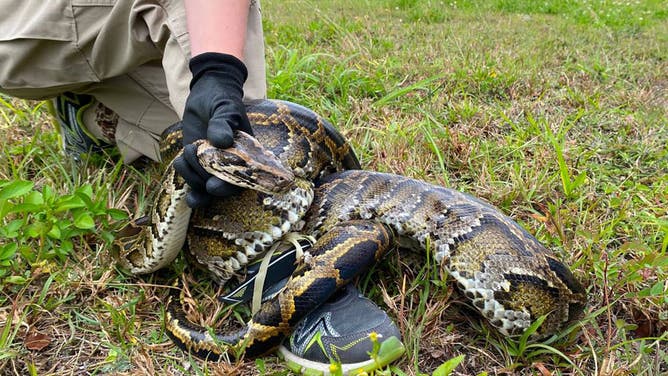
Burmese pythons are believed to have arrived in South Florida as pets in the 1980s and then were released by frustrated owners who got tired of feeding them mice and other live meals.
(Miami Herald/Tribune News Service via Getty Images)
There are tens of thousands of these massive constrictor snakes slithering through the Everglades, wreaking absolute havoc on the ecosystem. They’re apex predators with no natural enemies in Florida, and they’ll eat basically anything with a pulse, including raccoons, deer, birds and bobcats. But one of their favorite prey? Marsh rabbits.
"Years ago we were hearing all these claims about the decimation of mesomammals in the Everglades. Well, this researcher thought that sounded far-fetched, so he decided to study it," says Ian Bartoszek, a wildlife biologist and python tracker based in Naples. "So, he got a bunch of marsh rabbits, put [GPS] collars on them, and then he let them go in the core Everglades area … Within six months, 77 percent of those rabbits were found inside the bellies of pythons. And he was a believer after that."
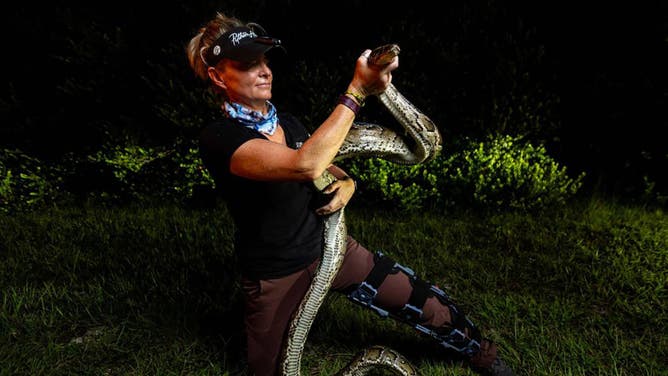
Python Huntress Amy Siewe holds an invasive 10-foot Burmese Python.
(D.A. Varela/Miami Herald/Tribune News Service via Getty Images)
This new experiment follows the same basic idea — use the pythons’ favorite snack to locate them — except this time, no actual bunnies will be harmed.
Sure, robo-bunnies might sound ridiculous. But so does sending random volunteers into the swamp to catch pythons with laundry bags and snake hooks. And that’s been Florida’s most effective python strategy for more than a decade.
Love all things wildlife and outdoors? Follow OutKick Outdoors on Instagram and TikTok!