Virginia AG: Roanoke College Broke State Law By Letting Male Athlete Join Women’s Swim Team
Virginia Attorney General Jason Miyares has determined Roanoke College violated the Virginia Human Rights Act.
Virginia Attorney General Jason Miyares has determined that Roanoke College violated the Virginia Human Rights Act (VHRA) by allowing a trans-identifying male to compete on the women’s swim team during the 2023 season — a decision that caused female athletes "emotional, physical and dignitary harms."
According to findings released this week by the complainants, Miyares’ office determined that the college discriminated against its female swimmers on the basis of sex, violating state law and opening the door for civil litigation under the VHRA.
"A private complainant who has received a notice of right to file a civil action may file a civil action under the Act for compensatory and punitive damages, as well as injunctive relief," the report states.
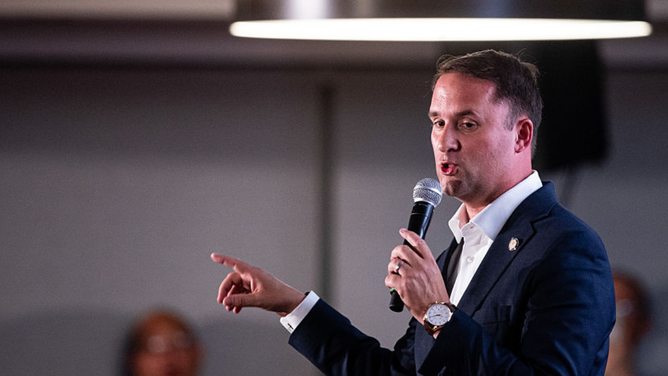
Virginia Attorney General Jason Miyares finds Roanoke College violated the state's Human Rights Act and retaliated against female swimmers.
(Al Drago/Bloomberg via Getty Images)
Roanoke’s policy "deprives those women of accommodations, advantages and privileges made available to others on the basis of sex," the AG’s office determined. "Additionally, allowing biological males to compete against females discriminates against females and that the VHRA would prevent biological males from competing against females at the collegiate level."
Roanoke Women's Swim Team Members Faced Retaliation For Speaking Out
The 2023 season at Roanoke saw months of internal conflict after a biological male attempted to join the women’s team. According to the female swimmers, school officials pressured them to accept the male athlete, despite their discomfort and concerns about fairness.
Miyares’ findings also point to possible retaliation against women who spoke out. Six female swimmers who had applied to participate in school-run travel courses were rejected just two weeks after they held a press conference opposing the inclusion of a transgender-identifying male athlete on the women’s team.
Roanoke College has not commented on the AG’s report.
But, in October 2023, President Frank Shushok Jr. made the following statement in support of the transgender student and the school's LGBT community: "In making this decision, the focus of senior administration and the board of trustees was on maintaining fairness in competition and protecting the integrity of all athletics at Roanoke College. We remain committed to supporting our LGBTQ+ community and our student-athletes, all of whom are valued members of our vibrant community."
At that same time, 10 team members publicly shared their story — becoming the first group of college athletes to speak out as a team against males in women’s sports. Some described feeling "demoralized," "discarded" and ignored by the administration. Others alleged that the athlete received special treatment, was excused from practices and made them uncomfortable by "showing off in a women’s bathing suit."
Most disturbingly, the women said they were told by school officials that even if the entire team refused to swim, the male athlete would be allowed to compete as a one-person team.
Title IX Legal Battles Keep Piling Up
Miyares did not say whether his office would take further legal action, but the report notes that affected athletes may be entitled to pursue their own lawsuits under the VHRA.
RELATED: Virginia School District Punishes Boys, Not Trans Student Who Filmed Them In Locker Room
This is just the latest in a long and heated series of legal battles stemming from President Donald Trump’s "Keeping Men Out Of Women's Sports" executive order.
The Roanoke story follows several high-profile Title IX cases across the country, including the NCAA lawsuit over swimmer Lia Thomas, lawsuits filed by athletes at Princeton and Swarthmore, and federal investigations into school districts in California, Minnesota and Washington.
Now, attention turns to the U.S. Supreme Court, which is set to hear two pivotal cases this fall regarding the legality of state laws banning biological males from competing in girls' and women’s sports. These rulings could have sweeping implications on the future of women's sports.