They Call Men In Women's Sports A Distraction. I Call It A Crisis | Payton McNabb
I will continue to stand up...and speak out.
Looking back on my time as a young athlete, I will always cherish the competition, teamwork, and friendships that sports gave me.
But I never could have imagined that an experience meant to be formative for me — and for so many young women and girls — could be jeopardized and even lead to permanent injury, not by accident, but because of a system that fails to protect us.
I wish that my story were an outlier.
In 2022, I was severely injured by a biological male athlete who was allowed to play on the girls' volleyball team. In the past three years, I’ve had to deal with a traumatic brain injury that has led to chronic pain, depression, anxiety, and partial paralysis on the right side of my body. My injury was the predictable outcome of a system that refuses not only to defend girls but to paint a full picture of the dangers of men competing in women’s sports.
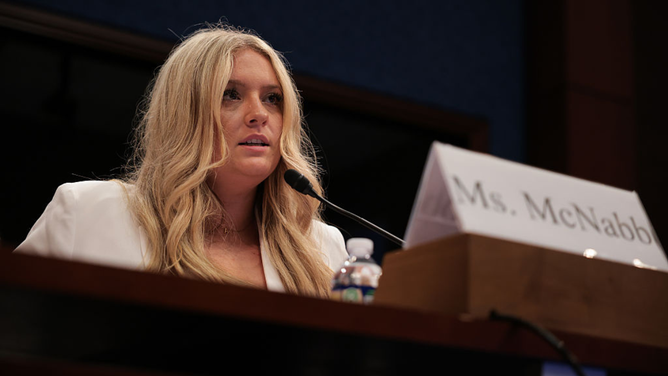
(Payton McNabb speaks during the hearing on "Unfair Play: Keeping Men Out of Women’s Sports" held by the Department of Government Efficiency (DOGE) Subcommittee at the U.S. Capitol on May 07, 2025 in Washington, DC. Photo by Kayla Bartkowski/Getty Images)
The obvious continues to be ignored: men are naturally bigger and stronger than women, which is why we need two separate categories of sports: male and female. Scientific evidence shows that males still have an advantage on the playing field, regardless of hormonal therapies for testosterone suppression and treatments. For all the mainstream institutions’ talk about "following the science," there is a persistent refusal to acknowledge the basic biological truths that undercut this narrative.
Recently in Michigan, a biological male helped the Ann Arbor Skyline High School volleyball team to the semifinals, taking away opportunities for young female athletes to compete on an even playing field. This player dominated high school girls’ volleyball for a second straight year. Every time I see this happen, I think about how quickly one decision can change everything for an athlete. I’ll never forget that feeling — knowing that the system failed to protect us, to protect me.
It’s unsafe, unfair, and absolutely ridiculous, and points to a bigger-picture failure of adults to keep children safe and to work with basic biological reality.
Ahead of what would end up being Skyline’s final game in the state tournament, parents of the opposing team, Byron Center, were sent an email by their school’s athletic director prior to the game that said the "biggest threat" to the team’s success would "come from those around" the team instead of on the court. Meanwhile, the biggest threat is the risk of having a biological male player critically injure a female athlete and potentially end her athletic career. This is blatantly unfair and unsafe.
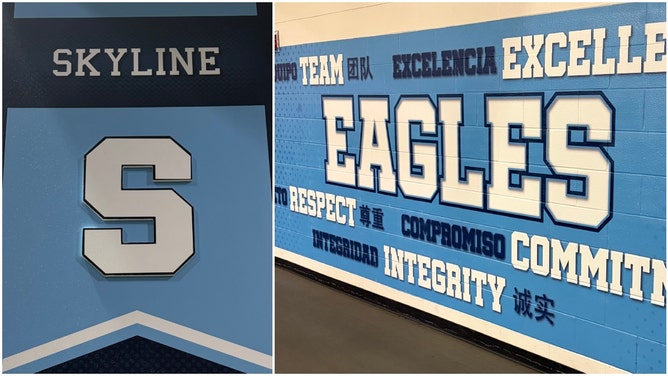
(OutKick)
Sadly, Michigan isn’t alone.
In California, a high school girls’ volleyball team earlier this year was forced to forfeit games and ultimately its season because a biological male was placed on the girls’ roster. In Massachusetts, a boy on a girls’ field hockey team propelled them to the state championship for the second time. In the same state, two male athletes played all season against all-female volleyball teams, helping secure an undefeated season.
Instead of addressing the obvious, too many administrators, coaches, and organizations attempt to bully women and girls for getting protective over their spaces — spaces that are legally protected by Title IX —and gaslight parents into believing that their daughters' fears, discomforts and injuries are a necessary sacrifice for a male’s feelings.
What’s even scarier is that this pattern isn’t confined to high schools and collegiate athletes. It’s trickling up to professional athletics, too.
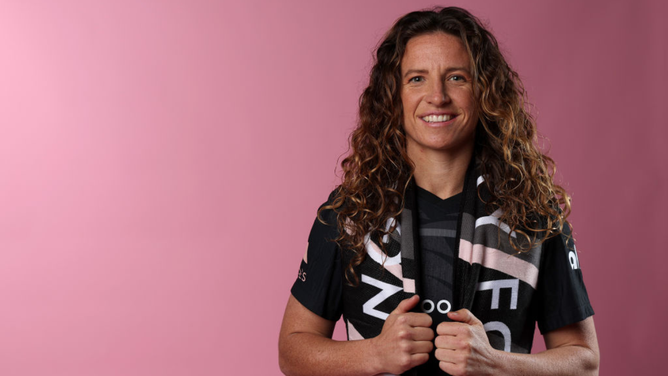
(Pro soccer player Elizabeth Eddy. Photo by Sean M. Haffey/Getty Images)
A National Women’s Soccer League player, Elizabeth Eddy, spoke up and urged the league to take action to establish clear sex-based outlines to maintain fairness. For doing so, she weathered a tidal wave of public outrage and backlash, even from her own teammates. Her crime was simply stating the obvious: women’s sports cannot and will not grow if women cannot compete on equal footing.
Still, there is hope. While these several instances are disheartening to see, as a former female athlete who was injured playing against a biological male, more organizations at the national and international level are standing up to protect women’s sports.
In Maine, a group of dads — known as the Maine Girl Dads — are standing up to protect young women in the state through a ballot initiative that would recognize sex-based definitions for athletic categories and private spaces such as locker rooms or bathrooms.
Just last week, the original winner of the 2025 World’s Strongest Woman competition — a biological man — had his title taken away once event organizers realized he was not a "she." Organizers from Official Strongman said in a statement that it is their "responsibility to ensure fairness" and make sure athletes compete in categories based on "whether they are recorded as male or female at birth."
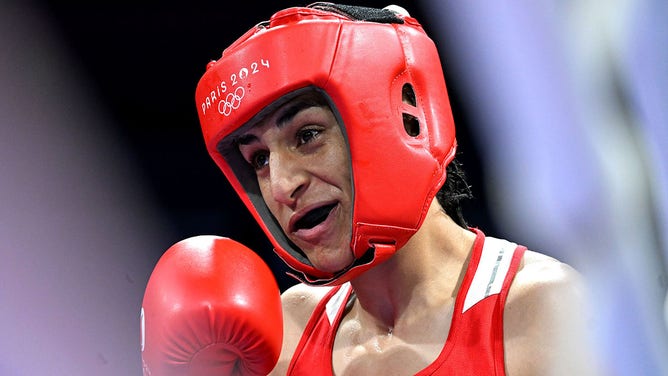
Algeria's Imane Khelif was at the center of a competitive controversy in women's boxing at the Olympics in 2024. (Photo by Fabio Bozzani/Anadolu via Getty Images)
Next year, the International Olympic Committee is set to reverse its policy, banning men from women’s categories on the international stage.
These actions are the correct steps forward, prioritizing fairness and the protection of women’s sports at both the national and international levels.
I continue to applaud the athletes, students, parents, and elected officials who aren’t afraid to speak up. Something I wrestle with is how different my life would be if more adults with authority had stood up and said that this isn’t right.
On behalf of girls — my little sister, my friends, and future generations of women— I will continue to speak out, dedicate my pain to a greater purpose, and be the one who stands up in hopes of sparing other women and girls from lost opportunities or an injury similar to the one I had to endure.
We owe this much to our girls: that they will never be put in this position again.
Payton McNabb is a former high school volleyball player and sports ambassador for Independent Women.