Kevin Feige Says Marvel Doesn't Engage With Online Fans Even After String Of MCU Failures
Marvel leadership isn't reading what its customers want
Marvel Studios changed the entertainment industry over the past 18 years, starting with the release of "Iron Man" in 2008. And the head of the studio, Kevin Feige, was credited with setting the tone for what Marvel films, and comic book films at large, could and should be.
For much of the next decade, Marvel films dominated the annual box office. They were, for the most part, critically acclaimed, built up a compelling, organized, overarching storyline that became known as the "Marvel Cinematic Universe." This culminated in the "Avengers" series, with "Endgame" becoming one of the highest grossing films of all time.
Since then, though, it's been much more miss than hit with Marvel films and television series. Projects like "Black Widow," "The Marvels," "Thunderbolts," "Eternals," "Shangi-Chi" and "Ant Man and the Wasp: Quantumania" were financial flops. "The Marvels" in particular was an unmitigated disaster, grossing just over $200 million worldwide and losing the studio tens, if not hundreds of millions of dollars.
RELATED: Marvel Actor Criticizes 'White Dudes' In Hollywood, Demands More 'Representation' In Movies
Some Marvel television shows have been equally disastrous, most notably the incandescently awful "She-Hulk" on Disney+. So what's gone wrong? Well, if you ask fans, it's that Marvel abandoned them, choosing to focus on hitting certain targets based more on industry trends on "representation," instead of targeting core audiences.
Well Kevin Feige all but confirmed that it's a feature, not a bug, of how he's choosing to operate. Not exactly reassuring for the future.
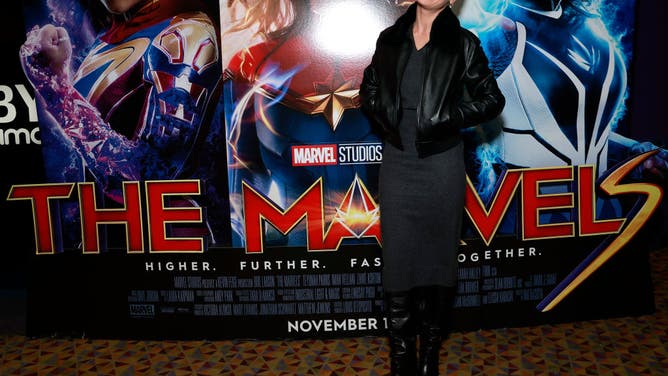
NEW YORK - Brie Larson attends THE MARVELS Movie Theater Pop-In on November 10. (Photo by Jason Mendez/Getty Images for Disney)
Feige Says Marvel Doesn't Look At Online Fandom
Feige, who went to USC Film School, spoke there recently after making a large donation to the school, along with Marvel Universe directors Ryan Coogler and Shawn Levy. And while the three touched on a number of issues, one section in particular jumped out, which is Feige's relationship to online comic book fan communities.
Per The Hollywood Reporter, Feige said that fan discussion "can be wielded with such force now that you have to beware." That ther's sometimes dark fandom communities online.
He continued, saying that with the volume of discussion, theories, criticism and debate, if you spend too much time on it, it "will crush you."
"There are hours and hours of theories on YouTube, hours and hours on TikTok, hours on subreddits," he continued. "You can read everything on everything and get a different point of view on it. You can go crazy. So, we don’t do that."
That's all true, and fair, to an extent. It's also a partial explanation for why it's so often felt like Marvel has no idea what fans are looking for with their films. Instead of accepting who their fanbase is, they tried to create one where it doesn't exist, pushing absurd content like "She-Hulk" and "The Marvels" on viewers that didn't want it. Unsurprisingly, it failed.
Yes, there are critics, but, as just one example, YouTube pages like "The Critical Drinker" and "Nerdrotic" routinely get millions of views on their videos either explaining flaws or doling out praise. Generally, movies they recommend do pretty well, not solely due to their recommendation, but because they're more in tune with what Marvel's core fanbase enjoys.
Movies at their core are products. It's consumer entertainment. If you want people to buy your product, they have to believe there's a return on their investment. With films, it's an escape, enjoyment, quality storytelling, thoughtful plots, or clever humor. Or all of the above. Marvel went away from that to focus on demographics instead. It didn't work, and if Feige wants to fix it, looking at online discourse might be the first place to start.