There's A Hidden Disadvantage MLB Playoff Teams Need To Avoid
Research shows hitters improve 8% against same reliever in series, forcing strategic gambles
Managers in the Major League Baseball postseason have to walk a fine line with strategy. One of the most recent examples came in game two of the National League Division Series between the Los Angeles Dodgers and Philadelphia Phillies.
With nobody out in the bottom of the ninth inning and the tying run at second base, Phillies manager Rob Thompson called for Bryson Stott to bunt and move the runner to third. Instead, the Dodgers anticipated it, with Max Muncy throwing to Mookie Betts to record a massive out at third.
Instead of a runner at third with one out, the Phillies had a runner at first with one out. The next hitter up, Harrison Bader, lined a single into center, making the bunt look that much worse. That's the fine line in playoff baseball. Do you get more aggressive when playing to tie? Do you take starting pitchers out earlier? Or trust them to get one more out?
Conventional wisdom has moved towards removing starters earlier. It's logical; starting pitchers generally struggle the third time through the order. With the advent of 100mph relievers with devastating sweepers, they're likely to be more effective than a tiring starter throwing his 100th pitch. But when pulling that lever, new research has shown that managers might be sacrificing long-term for short-term gains. All because of one of the most important factors in sports: familiarity.
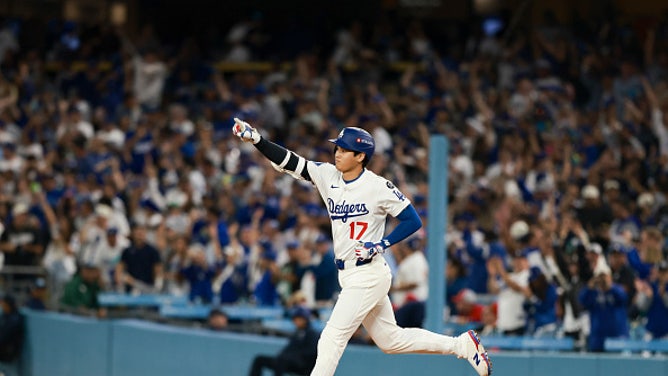
LOS ANGELES, CA - SEPTEMBER 30: Shohei Ohtani #17 of the Los Angeles Dodgers rounds the bases after hitting a two-run home run in the bottom of the sixth inning during Game One of the National League Wild Card Series between the Cincinnati Reds and the Los Angeles Dodgers at Dodger Stadium on Tuesday, September 30, 2025 in Los Angeles, California. (Photo by Nicole Vasquez/MLB Photos via Getty Images)
Reliever Familiarity Can Help Opposing Offenses
While most postseason outcomes are an extension of the random variance inherent in baseball, there are a few trends that seem to be meaningful.
The third time through the order penalty has been well understood and accepted for years. Essentially, when a starter faces the same hitters a third time in the same game, the offense has an advantage. Some combination of fatigue, but more likely familiarity, gives hitters a better chance at success.
That same principle, it turns out, also applies within the same series. And it's particularly meaningful in postseason series, with more games than a traditional best-of-three.
Travis Sawchik posted on X a chart of weighted on-base average, a stat that gives expected run value to each plate appearance outcome, based on how many times hitters face the same pitcher in a series. And based on data from 2020-2024, the more opportunities hitters get, the better the results.
This is still a relatively small sample size. And it's not as though the weighted on base average goes from .298 to .700. Still, the jump from .298 to .321 represents nearly an 8% increase in overall offensive performance in as little as three plate appearances. That's meaningful, and only adds to the difficulties managers face.
Think of it this way; in the playoffs, managers might only have one or two relievers they trust to get difficult outs with the game on the line. But if, as is so often the case in the postseason, all the games are close, they're forced to go to those same relievers repeatedly within a series. And logically, you want those trusted relievers to face the other team's best hitters.
For example, look at the Dodgers bullpen. It's been a mess all season, and only gotten worse in the past few weeks. Blake Treinen couldn't get a single out with a three-run lead against the Phillies. So Dave Roberts turned to Roki Sasaki to get the final out for the second straight game.
If Wednesday night's game three is also close and late, and Turner due up, if Roberts goes to Sasaki again, the numbers shift in Turner's favor. And even more so if the same situation plays out in a potential game four. That's the risk you take. Try to get the out in front of you, or plan for the future?
None of this guarantees success or failure. A reliever facing a hitter for the third time could still get an out. Or Aaron Judge, facing a reliever for the first time, could hit a mammoth home run and give the New York Yankees life. But baseball is about shifting odds and probabilities in your favor. And this is one meaningful way to do so.
Managers are generally overrated. But this is one example where game planning, strategy, and forward-thinking are all vitally important. And it's where the best in the business earn their paycheck.