The Players' Association Has Officially Overplayed Its Hand In WNBA CBA Standoff
The WNBA finally has real momentum thanks to Caitlin Clark — but the players' union seems hell bent on blowing it.
I've tried to be fair. I really have.
I've acknowledged repeatedly that the WNBA is finally in a moment of real momentum. Ratings are up. Attendance is up. Revenue is up. A massive $2.2 billion media rights deal is set to kick in this year. For the first time in the league's history, the players actually have leverage.
READ: WNBA Players Are Asking For More Money — Here's Why It’s Not As Crazy As You Think
And yet, after watching the Women's National Basketball Players Association (WNBPA) let the Jan. 9 CBA deadline come and go without a deal — then follow it up with a combative, wildly unprofessional statement — it's hard to reach any conclusion other than this:The players' union has overplayed its hand.
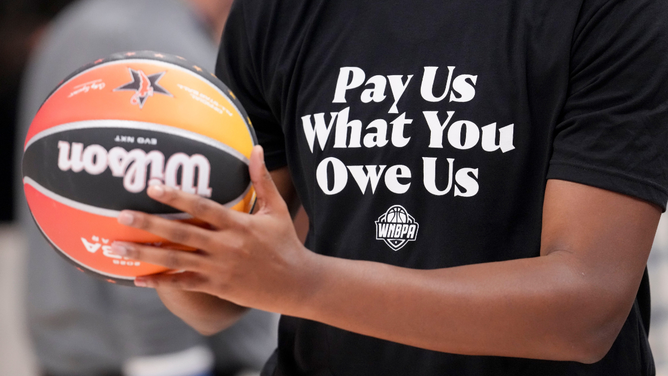
WNBA All-Stars warmed up in "Pay Us What You Owe Us" T-Shirts ahead of the game in Indianapolis.
(Grace Smith/IndyStar / USA TODAY NETWORK via Imagn Images)
Let's start with the facts.
The league's latest proposal includes maximum salaries north of $1.3 million, growing to nearly $2 million over the life of the deal. Average salaries would jump to more than $530,000, with minimums exceeding $250,000 in the first year. There's also an uncapped revenue-sharing component tied to league growth.
That's a seismic shift from where the league has been for the past three decades.
The core disagreement now isn't whether players should share in revenue — it’s how. The league has proposed players receive roughly 70% of net revenue, while the union is pushing for closer to 30% of gross revenue and a dramatically higher salary cap structure up front.
The league, though, says such a structure is not financially sustainable.
As a result of the missed deadline, the league and the WNBPA have now agreed to a moratorium on free agency. In layman's terms, WNBA free agency is officially on hold until a new CBA is finalized — leaving teams, players and fans stuck in limbo while negotiations drag on.
Still, the WNBPA insists it has been the reasonable party.
"Despite demonstrating our willingness to compromise in order to get a deal done, the WNBA and its teams have failed to meet us at the table with the same spirit and seriousness," the union said after the deadline passed. "Instead, they have remained committed to undervaluing player contributions, dismissing player concerns, and running out the clock."
That's where the wheels fall off for me.
Because, from the outside looking in, there's been plenty of movement from the league — and virtually none from the union. Just the same demands followed by scorched-earth rhetoric when the WNBA doesn't cave.
It's a bad look, and it's especially jarring given how this leverage came to exist in the first place.
Credit Caitlin Clark For The WNBA's Boom
No disrespect to the veterans. But there's one very big reason for the WNBA's recent explosion in popularity. She wears No. 22, plays for the Indiana Fever, and her name is Caitlin Clark.
You can point to other young stars like Angel Reese and Paige Bueckers, and, sure, they bring eyeballs to the sport, too. But Clark is the engine. And anyone who disagrees is lying to themselves.
She's why the Fever lead the league in attendance. She's why Indiana's road games started getting moved to larger arenas. She's why TV viewership spiked across the board. She's why new fans — fans who had never watched a WNBA game before — suddenly cared.
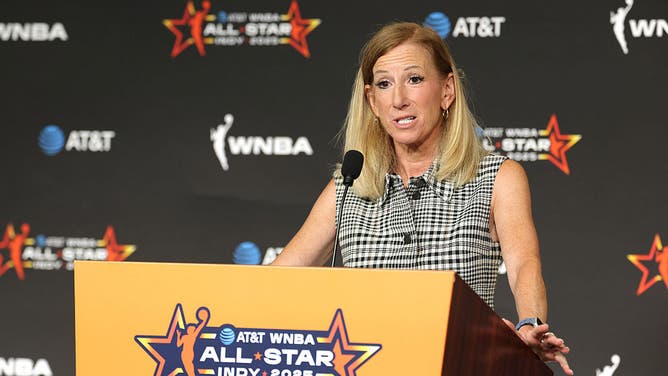
WNBA Commissioner Cathy Engelbert speaks to the media prior to the 2025 AT&T WNBA All-Star Game at Gainbridge Fieldhouse.
(Photo by Michael Hickey/Getty Images)
But those new fans haven't been welcomed with open arms. In fact, they've gotten nothing but vitriol from the WNBA old guard.
Courtside Club podcast's Rachel DeMita laid it out perfectly.
"The new fans have been pushed away from the jump. The new fans have been called names. There have been investigations on them. They have been shunned by WNBA media. They have been shunned by WNBA players… However, the new fans are the reason that the players have the leverage that they do.
"The new fans are the ones who are tuning in and bumping the viewership across the entire WNBA… The new fans have been pushed away, and I feel like that’s really unfair to now say that you have all this momentum, and you have all this viewership… The WNBA is in the position that it’s at because of these new fans that you said were horrible from the jump."
Bingo. That's the contradiction at the heart of all this.
For two years, fans of Caitlin Clark were villainized. Called racist and toxic. Blamed for everything from online discourse to locker-room tension to alleged slurs yelled from the stands (which turned out to be a completely false report, by the way). Clark herself was routinely dismissed, minimized or outright targeted by her own peers.
Those same peers are now using Clark's popularity as leverage against the league.
And Clark, while supportive of the players' union, has made it clear she wants this stand-off to end.
"We need to play basketball," Clark said at USA Basketball training camp last month. "That’s what our fans crave, and that’s what all of you crave as well, is you want the product on the floor. ... It’s important that we find a way to play this next season."
Unlike many of her fellow players, Clark hasn't fled to side projects like Unrivaled or Project B. She's committed fully to the W.
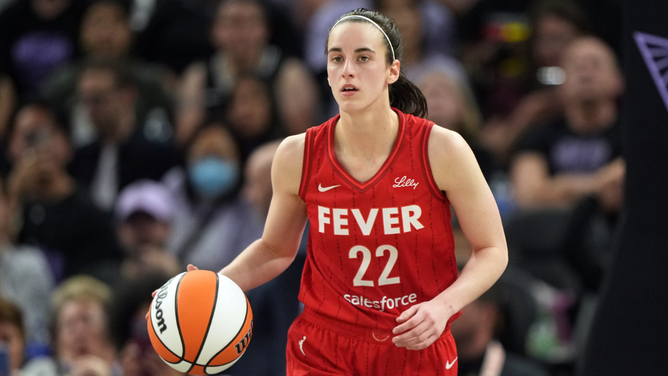
Caitlin Clark has brought unprecedented popularity to the WNBA.
(Darren Yamashita-Imagn Images)
Meanwhile, WNBPA president Nneka Ogwumike and vice president Napheesa Collier insist the league is the problem.
"We absolutely agree (with Clark). We just feel like the league is not agreeing," Collier said. "I think that we have been very compromising, like we're not asking for anything crazy. I think we've been very respectful, very realistic with what we're asking, and we are compromising."
That's certainly not how it looks from here. Collier came out guns blazing in her September exit interview and has kept that same energy ever since.
The union has already authorized a strike. The CBA deadline has passed (twice). Free agency is frozen. The rhetoric has escalated. And the latest statement from the WNBPA read less like a professional negotiating position and more like a Facebook rant.
We're all tired of it.
The WNBA is booming because new fans showed up. Those fans showed up because of Caitlin Clark. And instead of embracing that moment, the league's loudest voices spent two years alienating the very people who made this possible.
And now they're throwing a fit and risking a strike.
If this ends with a delayed or canceled season, the players leading the union will have no one to blame but themselves.
Except we already know they'll blame everybody else.