NIL Deals Getting Rejected Already By New College Sports Commission
The purge of mostly fake NIL agreements has already begun
Things are changing quickly in the name, image and likeness world, thanks to the new College Sports Commission.
This week, that new agency sent out a lengthy letter to schools informing them that the commission had rejected a number of agreements between recruits or players and the NIL collectives that have proliferated throughout college football in recent years. Those NIL collectives had previously operated with little oversight or interference, allowing them to funnel money to key players on behalf of their associated schools.
Part of the new House-approved settlement, though, created this commission to evaluate NIL deals moving forward. And they're already making their presence felt.
RELATED: House Settlement Approved, College Athletics Undergo Massive Change
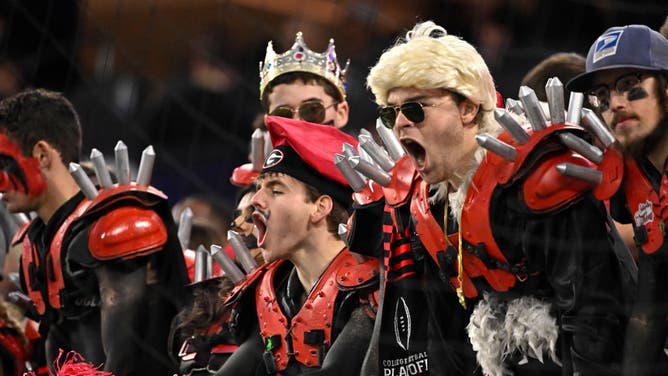
Inglewood, CA - January 09: Georgia Bulldogs fan cheer in the stands before the CFP National Championship Football game against the TCU Horned Frogs at SoFi Stadium in Inglewood on Monday, January 9, 2023. (Photo by Keith Birmingham/MediaNews Group/Pasadena Star-News via Getty Images)
College Sports Commission Shuts Down Invalid NIL Deals
Some of these arrangements, per the commission, have no "valid business purpose" and, according to a new Associated Press report, "don't adhere to rules that call for outside NIL deals to be between players and companies that provide goods or services to the general public for profit."
The new ruling is expected to lead to several collectives permanently shutting down, as schools will now pay players directly, and the "fake" NIL agreements will be under stricter scrutiny.
A number of them have already closed, with those supporting programs like Georgia, Colorado, Alabama and Notre Dame announcing plans to shut down. Some of those schools have made deals with Learfield to make legitimate NIL arrangements.
Roughly 1,500 deals have been cleared in the month or so since the NIL Go system started, with financial figures ranging from "three figures to seven figures." Many others though, were denied because they did not fit with the new "valid business purpose" required standard.
"In other words, NIL collectives may act as marketing agencies that match student-athletes with businesses that have a valid business purpose and seek to use the student's NIL to promote their businesses," the memo explained.
How this impacts schools that have maximized NIL collective-based recruiting, like say, Texas A&M, remains to be seen. But things are rapidly changing in college football. As they always do.