Kansas City Chiefs Show Nobody's Learned Their Lesson With Sports Franchises
Hunt family worth $25B gets Kansas to pay for new stadium construction while team retains 100% of ticket, concession income.
The Kansas City Chiefs are officially leaving the state of Missouri. After over 50 years at Arrowhead Stadium, starting with the 1972 season, the Chiefs announced they're going to build their new stadium in the state of Kansas.
This is the culmination of years of lobbying, posturing, demanding handouts, and getting rejected by Missouri voters. But it's also the culmination of decades of work from sports team owners who have realized that they can use the power of emotion to get gigantic financial breaks from taxpayers.
And when you're the Hunt family, with an estimated net worth of at least $25 billion, you can always use more massive subsidies from the government. Especially when those subsidies allow you to construct a stadium where you can then charge exorbitant prices to the very same people who've already given you an outrageous donation.
The so-called "deals" to construct new stadiums have traditionally been overwhelmingly lopsided in favor of whatever team and ownership is constructing them. But this one is a whole new level of absurd, and sets the standard for taking advantage of local taxpayers.
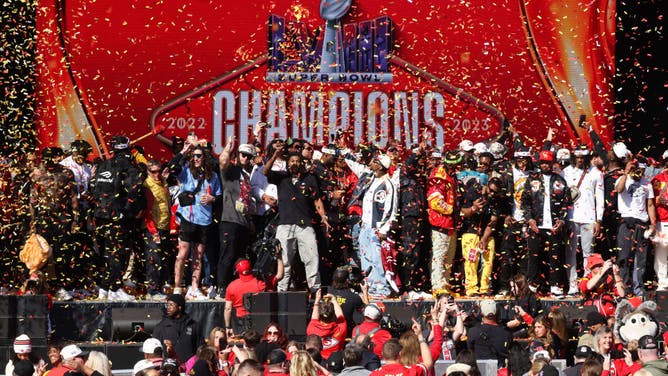
Kansas City Chiefs players celebrate during their Super Bowl LVIII victory parade. (Photo by Jamie Squire/Getty Images)
Chiefs New Stadium Deal Is Ridiculously Lopsided
Joe Pompliano posted on X this week about the Chiefs new arrangement with the state of Kansas, and boy oh boy is it bad.
The Chiefs, per Pompliano, get roughly $3 billion in funding from the state, to cover stadium construction costs and build mixed-use development, as well as the value of enormous tax incentives. In return for all those benefits, the state gets, well, basically nothing. Of course they don't.
The organization keeps 100% of all income from stadium activities. That includes tickets, concessions, in-stadium advertising and sponsorships, any potential revenue from selling the naming rights, the classic and laughably NFL "personal seat licenses," and much more. That doesn't just apply to Chiefs home games. Oh, no. It also covers any ancillary events hosted at the new building, such as concerts, basketball games, or other sporting events.
Sure, the state technically owns the stadium, but Pompliano found that the $7 million in annual rent the Chiefs will pay doesn't even go back to taxpayers. It's held in an account that the team can use to fund future repairs or renovations, along with expenses they incur to operate the building. The Chiefs are paying rent to themselves that can go towards staffing the building with security, food sellers, and parking staff.
Again, the Hunt family is worth $25 billion. This is insanity.
The state will get some sales tax revenue, of course, and income from the mixed-use development will help some. But this is just about the most lopsided stadium deal in US history. One that will take decades to pay off, if it ever does. And of course, local income tax revenue taken from a massive swath of the Kansas side of the Kansas City metro area will be used to pay back the nearly $3 billion in bonds the state is issuing. Instead of being used to pay for literally anything else.
This is the new paradigm for sports team ownership. They've realized that local fans view their favorite team as a civic institution, something that "belongs" to the city or the state. But they don't. They belong to ownership groups. And ownership groups are run by people who will happily take free money, even when they don't need it.
The average household income in Kansas is roughly $70,000. You need to take the annual income of 357,142 average households in the state to get to the Hunt family net worth. Why are those people giving them a gigantic handout? Because the Hunt family realized they can get away with it. Everyone's desperate for relevance, and having an NFL stadium means relevance. But, per usual, it's the team that benefits. After getting a free $3 billion, they'll sell PSL's for tens of thousands of dollars. Sell suites for hundreds of thousands, if not more. Sell individual tickets to games for $400-500 each. And count on fans buying new merchandise. Not a bad setup!