How to Build a Competitive College Football Roster in the NIL Era
Send this to your favorite school's GM
Let's face it, college football in today's day and age is nothing like it was even five years ago.
NIL and the transfer portal have introduced new wrinkles – and headaches – for coaches and programs to have to navigate, so building a roster is as complex as it has ever been.
READ: "College Football Is Sick" With NIL Buyouts And Beyond.
I have often found myself gnashing my teeth over the direction of the sport, but today I decided to focus that energy on how exactly to build a roster in this modern era of college football.
Let's break this down into some key components.
Follow the NFL Model
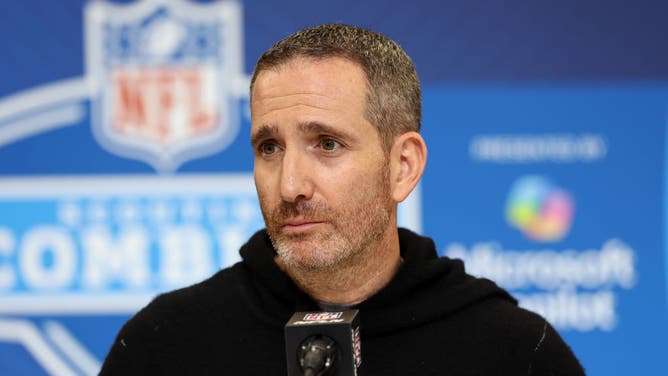
General manager Howie Roseman of the Philadelphia Eagles. (Photo by Stacy Revere/Getty Images)
It's not a new development to say that college football is becoming more like the NFL.
With new roles like general manager being created to help deal with the transient and transactional nature of the college game, more and more schools are starting to treat their rosters like NFL operations.
That means abandoning the outdated idea of an 85-man scholarship roster and instead viewing it as a 53-man roster.
Gone are the days of stacking and shelving five-star talent just to keep them waiting in the wings. Most teams are realistically operating with a two-deep at most positions, with the occasional three-deep at high-attrition spots (think trenches).
In reality, you're paying big money to roughly 35–45 players. Think of the rest as cost-controlled development.
Recruiting now functions more like a draft: cheaper, unproven talent you hope will provide depth and develop without immediately chasing a payday elsewhere.
Which brings us to money.
Budget Allocation and the Tier System
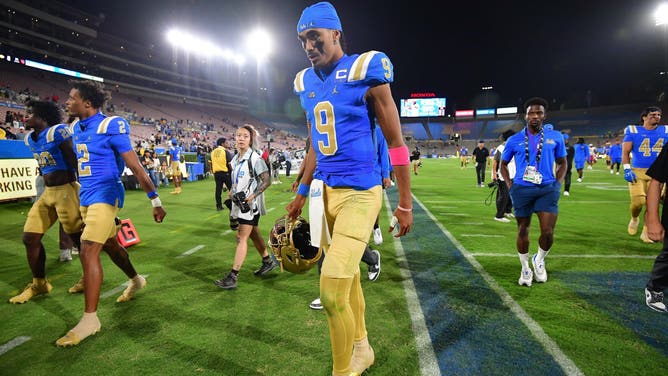
UCLA quarterback Nico Iamaleava. Mandatory Credit: Gary A. Vasquez-Imagn Images
The average Power Four football budget — combining revenue sharing, boosters, and collectives — now sits north of $25 million.
That number is only going up, but for now, it’s a clean baseline.
READ: NIL Wars Between SEC And Big Ten.
The question becomes how to allocate that money without overspending on one player or undervaluing another.
Many general managers use a tier system rooted in NFL positional value, and since college football is mirroring the pros more each year, it makes sense to adopt it.
Tier One
- Starting quarterback
- Edge rusher
- Left tackle
- Cornerback
- X receiver
You could argue WR1 and CB1 sit in a Tier 1.5, but the idea is simple: quarterback is king, and the next most important positions are those that protect your QB and hunt the opposing one.
Tier Two
- Starting running back
- Slot receiver
- Backup quarterback
- Interior offensive and defensive linemen
Linebackers and safeties likely fall into Tier 2.5, if we’re splitting hairs.
A note on running backs: unless you’re dealing with a truly special player (think Saquon Barkley), they sit near the bottom of Tier Two. Their positional value just isn't very high in today's game and they wear down quicker than most other positions.
Tier Three
This is a developmental and depth tier, and where a lot of your high school recruiting budget should be spent outside five-star or top-100 high school talent (think low four-star and high three-star players who could develop into quality starters).
Tier Three is where a staff that is great at identifying and evaluating talent earns its pay; anyone can tell you a five-star WR will be a monster, but can you pick out the three-star kid and make him the next Puka Nacua?
Spending Breakdown

Now that we have our position groups identified, it's time to breakdown where that money will go.
If we stick to the $25 million budget, it would look a little something like this:
Tier One is where roughly half of your funds will go ($11.25 million).
A QB gets 18% of the budget in the NFL, and it's no different in college, as a high-level P4 starter will pull down a minimum of $3 million, more than likely 4.
Having an elite QB is almost a non-negotiable, but an elite edge rusher and left tackle is almost as important.
You're probably going to end up spending $1.5 million on two game-wrecking edge rushers and a brick wall at left tackle.
A true WR1 that every defensive coordinator has to game plan for and lose sleep over will also fetch north of $1 million, as will a lockdown CB1.
From there, Tier Two gets a little under $9 million to play with, with your slot receivers and interior linemen eating most of the budget there just through quantity alone.
Tier Three is going to cost around $3–4 million and will be allocated to roughly 40% of your roster, so a lot of these guys will be cheaper depth pieces and younger developmental players.
It seems gross to breakdown college athletes based on what they are worth, but that is just the world we live in these days.
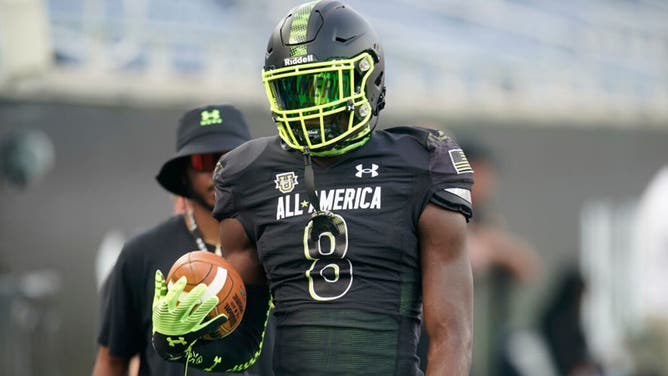
Recruiting vs. Transfer Portal
Finally, we get to my favorite part of the experiment: talent acquisition.
Those of you that are recruiting freaks like myself will be happy to know high school talent acquisition still plays a big role in building a roster, but the transfer portal is vital to any successful college program.
Your high school recruiting philosophy should prioritize Tier One players with super high upside, meaning you should spend on five-star and top-100 level quarterbacks, edge rushers, left tackles, and CB/WR1s.
Other players like interior linemen, safeties, and linebackers should still be recruited out of high school, but you shouldn't reach for a high-priced talent when a kid who is 80% as good comes at half the cost.
When it comes to the transfer portal, treat it like free agency.
One-year rentals are fine, and you should never portal for depth. This should be to fill glaring holes on the roster.
Tier One is the priority in the portal, especially if you are deficient at a spot like tackle, edge rusher, or receiver.
By having a healthy balance of high school recruiting and the portal (probably a 70-30 split for programs with strong NIL), you can prevent your roster from hollowing out.
And there you have it!
NIL and the transfer portal have made college football almost unrecognizable, and I hate it, but if your team starts to adapt to the new model, they should be fine.
You will start to see more and more teams adapt a model that is similar to the NFL, and although that makes me sad to see, it doesn't mean college football is mirroring the NFL, rather, it is just mirroring the NFL's positional value structure.
Hang in there, college football fans. The sport is getting weirder by the day, so let's all just weather the storm at this point.