FIA Finally Boosts IndyCar Super License Points, But Could It Turn The Series Into A Stepping Stone?
It's a good thing, that hopefully doesn't become a bad thing
One big gripe a lot of IndyCar fans have had for years is that the FIA doesn't give the top finishers enough points toward the Super License needed to compete in Formula 1.
Well, that is changing — a little — but is it a good thing?
Here's a quick rundown of how the FIA's Super License system works: you need one to race in F1, and you earn one through success in other series. You need 40 points over three seasons, and the FIA designates how much a finishing position in each series is worth.
READ: NAILED SOME, FACE-PLANTED ON OTHERS: REVISITING SOME BOLD 2025 FORMULA 1 PREDICTIONS
Formula 2 is the highest with multiple places in the championship, earning 40 points in a single season.
Winning an IndyCar title earns 40 points, and a second-place finish earns 35, but after that, it tails off significantly, with third place only earning 20.
On Thursday, the FIA announced its update to IndyCar's Super License points allocation, and while first and second stay the same, there's a significant increase from third on down.
On one hand, this is great. It shows that the FIA is well aware of the competitiveness and the skill in the series and decided it was worth more than it had been.
That said, if super license points were dished out based on the difficulty and skill of the series, then IndyCar should be higher than F2. While F2 is great, it's a developmental series, while IndyCar has much more experienced drivers, some of whom have even raced in F1.
But, if IndyCar were worth more points, couldn't it become a sort of feeder series, too?
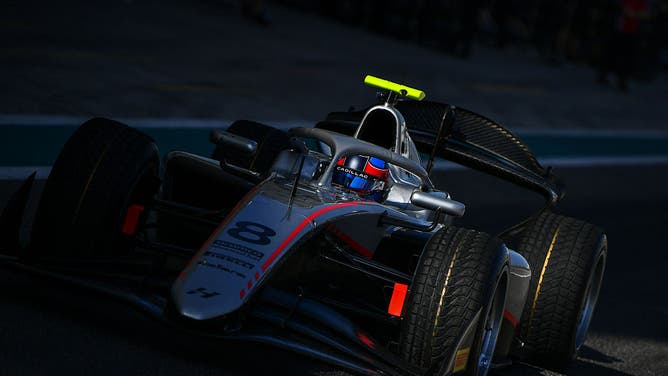
Colton Herta's jump from IndyCar to F2 really put the Super License system in the spotlight. (Photo by James Sutton - Formula 1/Formula Motorsport Limited via Getty Images)
Colton Herta's Jump To F2 Put The IndyCar/Super License Situation In The Spotlight
The IndyCar/F1 Super License situation has gotten a lot of talk recently because it's the reason ex-IndyCar driver Colton Herta is jumping to F2 next season. Herta failed to rack up the necessary number of points to secure one of the two seats at Cadillac (owned by TWG Motorsport, which also owns Andretti Global, who he raced for in IndyCar), which is hard to do unless you finish first or second.
But, in F2, first, second, and third in the championship all earned 40 points, making them automatically eligible for Super Licenses.
It's still much easier to get these points in F2 than in Indy, based simply on the way they're allocated, and that's why Herta is going to F2.
READ: CADILLAC WILL UNVEIL ITS LIVERY DURING THE SUPER BOWL
Sure, Herta's situation is unique, but it's top-level IndyCar talent leaving the series.
While it might be nice to get some global recognition from the FIA, if the number of points allocated to IndyCar continues to go up, we might see more of the series' top talent leaving, too.
I mean, just last summer, there were rumors that series champ Alex Palou might be headed to F1. He shot those down, but I think we're going to be seeing more and more F1 buzz around top IndyCar drivers.
As a fan, I'm excited to see this kind of cross-pollination. That's one of the many things that make motorsports cool: drivers from different disciplines moving from series to series and competing.
But as IndyCar continues to grow and attract exciting talent and big, marketable personalities, it needs to keep them. Not lose them by becoming a stepping stone to F1.