Virginia Tech Swimmer Refuses to Stay Silent After Losing NCAA Finals Spot
When Reka Gyorgy stepped onto the pool deck for the NCAA Championships in 2022, she wasn’t just representing Virginia Tech. She was closing out her senior season in the 500-yard freestyle, an event she had worked for years to qualify for.
But instead of advancing to the finals and scoring for her team, she finished 17th — one place short. That spot went to Penn’s Lia Thomas, a biological male competing in the women’s division.
Virginia Tech Female Swimmers Protested Lia Thomas In 2022, ESPN Knew But Did Not Report The Facts: Exclusive
For Gyorgy, the disappointment went beyond missing a race. She was also told to share a women’s locker room with Thomas, something she describes as shocking and unsafe.
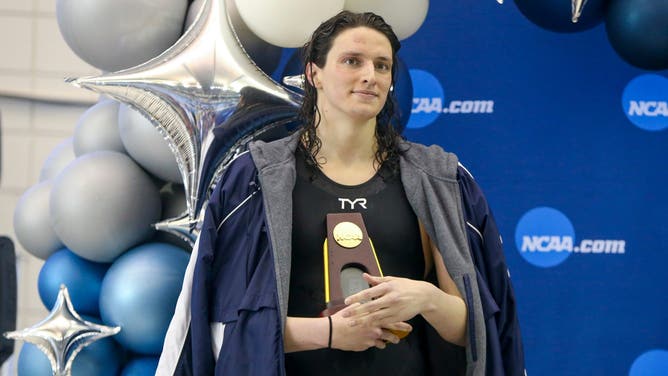
Mar 17, 2022; Atlanta, Georgia, USA; Penn Quakers swimmer Lia Thomas holds a trophy after finishing first in the 500 free at the NCAA Womens Swimming & Diving Championships at Georgia Tech. (Mandatory Credit: Brett Davis-USA TODAY Sports)
(Brett Davis/Imagn Images)
"I never imagined I’d have to look over my shoulder while changing in a women’s locker room," she says.
In this interview with OutKick, Gyorgy recounts how the NCAA dismissed athletes’ concerns, how silence shaped the atmosphere around the event, and why she eventually chose to speak out.
She also reflects on Virginia Tech’s role, ESPN’s absence, and her decision to encourage other athletes not to stay quiet.
(Paul Rutherford/Imagn Images)
How did it feel to qualify for the 500-yard freestyle at the NCAA Championships, only to get bumped last minute?
"Qualifying for any NCAA event is a privilege because you’re racing against the best. I was excited — it was my senior year. But knowing I’d have to compete against a male added pressure. I knew one woman’s spot would be taken. When I placed 17th, I got bumped from the finals and couldn’t score points for my team. It was devastating. I felt cheated because the NCAA let a male compete against females."
Did the physical differences stand out?
"Yes. I’m 5’10", but when I bumped into Thomas on the pool deck, it hit me — he was taller and stronger. I realized I had no chance against that advantage."

Did the locker room situation affect you as well?
"Absolutely. I knew I’d have to share the locker room, undressing in front of him. I never thought I’d be in that position."
Did you feel isolated in opposing his participation?
"Very much so. Nobody told us ahead of time that Thomas would compete. We weren’t allowed to talk about it. The day before, my teammates and I told our coaches we were uncomfortable. They raised it with the NCAA, but the response was basically, ‘the girls will have to suck it up.’"
Was there any hope the NCAA would act?
"No. By December we had already seen articles suggesting Thomas could compete in March. No one addressed what it would mean. So when it happened, it was a shock."
What was the emotional toll?
"It was tough. I was scared to speak up, like my teammates. But after I was bumped, my head coach told me, ‘If you want to say something, I’m behind you.’ That gave me courage. I made finals in my main event, and then I wrote a letter to the NCAA. With my coaches’ help, I handed it in. Three years later, I’ve never heard back."

ATLANTA, GA - MARCH 18: Virginia Tech swimmer Reka Gyorgy swims the 400 IM consolation finals during the NCAA Swimming and Diving Championships on March 18th, 2022 at the McAuley Aquatic Center in Atlanta Georgia. (Photo by Rich von Biberstein/Icon Sportswire via Getty Images)
ESPN held an event at Virginia Tech in 2022, but didn’t highlight your story. Do you think it was an omission?
"I think so. At the time, I stayed quiet publicly. I was applying for my green card and getting threats against myself, my family, and my friends. Maybe that’s why ESPN didn’t report my story. But looking back, sports media should have spoken up. This issue affects not just college, but high school and even Olympic levels."
What encouragement would you give young women and families who hesitate to speak up?
"Don’t be afraid. Speaking out won’t ruin your future. Today there’s a community of people who will support you — including me. If anyone wants to speak up, reach out. We’ll make sure you have a safe space to tell the truth."
Three years later, do you feel progress is being made?
"Yes. Step by step. Three years ago, I never thought I’d be in this fight. But now I see administrators changing rules and leaders admitting that men have advantages over women. That’s progress, and it’s worth it."
Keeping Up the Good Fight
Reka Gyorgy’s story is about more than one race. It highlights how institutions failed to protect women’s competition and how silence often replaced action.
Told to "suck it up," she lost her chance to compete while being forced into situations she never expected.
RELATED: Virginia Tech Player Hires Noted Sports Attorney In Redshirt Revenue-Sharing Dispute
Yet her response — choosing to speak out — has placed her among a growing number of athletes challenging policies they believe undermine women’s sports.
For Gyorgy, the goal is simple: no girl should lose her place or her safety because officials are unwilling to act.
Three years later, her voice is part of a movement pressing for change.
And as she makes clear, the fight is not about the past, but about the future of women’s athletics.
Send us your thoughts: alejandro.avila@outkick.com / Follow along on X: @alejandroaveela