Is Dan Campbell Right About His Overtime Strategy?
Dan Campbell says knowing what you need to score is more valuable than getting ball first
The NFL's new overtime rules have already come into play more frequently than you'd expect in the first few weeks of the 2025 season.
Three games have gone to overtime: the New York Giants against the Dallas Cowboys in week two, the Green Bay Packers against the Cowboys in week four, and the San Francisco 49ers against the Los Angeles Rams on Thursday. In all three games, the coach who won the overtime coin toss decided to kick instead of receiving.
Detroit Lions head coach Dan Campbell, long known as one of the most aggressive strategic coaches in the league, addressed that strategy in a press conference this week.
"You want the ball last. You want to know what you have to get. I think that would be the norm with the new rules now," Campbell said.
The one downside? Having the opposing offense chew up a huge percentage of the 10 minute overtime period, giving little time for your team to respond.
"If you are last, then the offense chews up nine minutes on the clock or whatever, and they score, do you have enough time to answer back in the regular season? But that’s not the norm. Most of the time you’re not going to have that type of drive in overtime. The norm is, I want to see what I’ve got to answer with," he added.
So is he right?
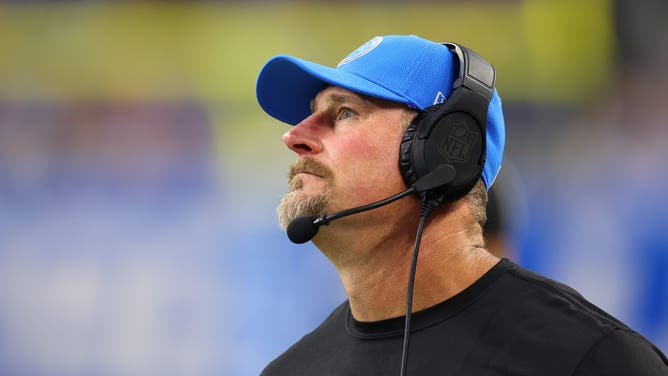
DETROIT, MICHIGAN - OCTOBER 27: Head coach Dan Campbell of the Detroit Lions looks on in the third quarter of a game against the Tennessee Titans at Ford Field on October 27, 2024 in Detroit, Michigan. (Photo by Gregory Shamus/Getty Images)
Dan Campbell Has A Point With NFL Overtime Rules
Campbell is right to say that knowing what you need to do is more valuable than getting the ball first. The best way to optimize your strategy and playcalling is to know what your goal is.
But with the glacial pace of the NFL and the short overtime period, it's a bit tougher math problem to solve. In college football, for example, drive times are generally shorter. Uptempo offenses, lack of huddling, and less talented defenses make it easier to plan, defensively, for a 3-4 minute drive.
With the NFL though, there's a seemingly limitless amount of standing around before the ball is snapped.
As a result, some analytical models have suggested that there's a marginal advantage to receiving. One suggested that win probability increases by 2-4% by taking the ball. But the conventional wisdom among most data-driven analysts is that knowing what you need to do matters most.
Not to mention the advantage of say, being able to go for two to win after scoring a touchdown on the second possession of overtime. For someone who's reputation is more about motivation than brilliance, as usual, Campbell's thought through the answers. That's part of why Detroit's turned into a juggernaut since he took over.