Here’s How The SEC Benefits From Its Football Conference Scheduling
Who has it tougher in non-conference between the SEC and the Big Ten?
Debates in the past few weeks, if not months, in college football have revolved around the differences and importance of scheduling between the Big Ten and SEC.
SEC players and coaches during their media availability pointedly said that there's nothing that can compare to the rigors of an SEC schedule. That other conferences simply couldn't compare, and that as a result, the SEC deserves more playoff spots. This debate came up during last year's College Football Playoff selection process, when the Indiana Hoosiers got in with one loss ahead of three-loss teams like Ole Miss and South Carolina.
Despite the SEC's poor performance in the playoff and bowl season in general, particularly against the Big Ten and Notre Dame, those complaints haven't stopped.
Big Ten coaches shot back at their media days, with Indiana's Curt Cignetti saying he followed an "SEC scheduling" philosophy. James Franklin from Penn State said the Big Ten made a huge mistake going to nine conference games while the SEC plays eight. Washington's Jedd Fisch compared the SEC's penchant for playing FCS teams in November to the NFL playing CFL teams late in the season.
Still, what does the difference between conference games, nine vs. eight, actually mean in practice? We compared the two schedules to make it more obvious.
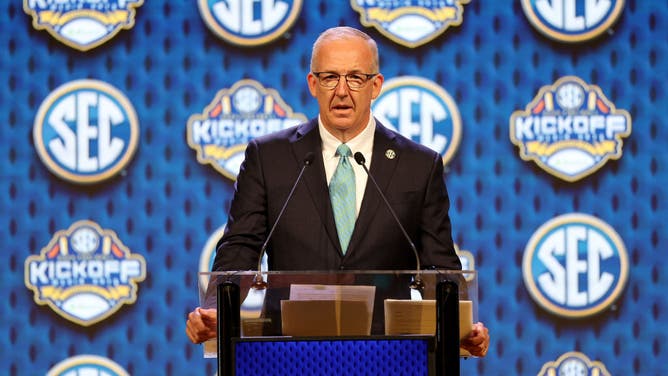
SEC's Greg Sankey says there is no rift between himself and Big Ten's Tony Petitti (Photo by Tim Warner/Getty Images)
Yes, The SEC Does Have Scheduling Advantage Over The Big Ten
To start, here's the full list of non-conference schedules for the Big Ten.
Illinois
- vs. Western Illinois (FBS)
- at Duke (Power 4)
- vs. Western Michigan (FBS)
Indiana
- vs. Old Dominion (FBS)
- vs. Kennesaw State (FCS)
- vs. Indiana State (FCS)
Iowa
- vs. UAlbany (FCS)
- at Iowa State (Power 4)
- vs. Massachusetts (FBS)
Maryland
- vs. Florida Atlantic (FBS)
- vs. NIU (FBS)
- vs. Towson (FCS)
Michigan
- vs. New Mexico (FBS)
- at Oklahoma (Power 4)
- vs. Central Michigan (FBS)
Minnesota
- vs. Buffalo (FBS)
- vs. Northwestern State (FCS)
- at Cal (Power 4)
Michigan State
- vs. Western Michigan (FBS)
- vs. Boston College (FBS)
- vs. Youngstown State (FCS)
Nebraska
- at Cincinnati (Power 4)
- vs. Akron (FBS)
- vs. Houston Christian (FCS)
Northwestern
- at Tulane (FBS)
- vs. Western Illinois (FBS)
- vs. Louisiana-Monroe (FBS)
Oregon
- vs. Montana State (FCS)
- vs. Oklahoma State (Power 4)
- vs. Oregon State (Pac-12)
Ohio State
- vs. Texas (Power 4)
- vs. Grambling State (FCS)
- vs. Ohio (FBS)
Penn State
- vs. Nevada (FBS)
- vs. FIU (FBS)
- vs. Villanova (FCS)
Purdue
- vs. Ball State (FBS)
- vs. Southern Illinois (FCS)
- at Notre Dame (Independent)
Rutgers
- vs. Ohio (FBS)
- vs. Miami (OH) (FBS)
- vs. Norfolk State (FCS)
UCLA
- vs. Utah (Power 4)
- at UNLV (FBS)
- vs. New Mexico (FBS)
USC
- vs. Missouri State (FBS)
- vs. Georgia Southern (FBS)
- at Notre Dame (Independent)
Washington
- vs. Colorado State (FBS)
- vs. UC Davis (FCS)
- at Washington State (Pac-12)
Wisconsin
- vs. Miami (OH) (FBS)
- vs. Middle Tennessee State (FBS)
- at Alabama (Power 4)
All told, between the 18 teams in the conference, there are 13 games against Power 4 Conference teams, Notre Dame, or Pac-12 schools OSU and WSU. There are 28 other games against teams in the FBS, and 13 games against FCS schools. So 41 of the 54 non-conference games come against FBS programs, including teams in top-level conferences. With few exceptions, USC at Notre Dame being one, they come in the first three weeks of the season, with the rest of the season being conference games.
So for each team, there's an average of 0.7 games against Power 4 teams, 0.7 games against FCS programs, and 1.5 games against non-Power 4 FBS teams. Then the nine conference games against other Big Ten teams.
And here's the SEC schedules to compare
Alabama
- at Florida State (Power 4)
- vs. Louisiana-Monroe (FBS)
- vs. Wisconsin (Power 4)
- vs. Eastern Illinois (FCS - Nov. 22)
Arkansas
- vs. Alabama A&M (FCS)
- vs. Arkansas State (FBS)
- at Memphis (FBS)
- vs. Notre Dame (Independent)
Auburn
- at Baylor (Power 4)
- vs. Ball State (FBS)
- vs. South Alabama (FBS)
- vs. Mercer (FCS - Nov. 22)
Florida
- vs. Long Island (FCS)
- vs. USF (FBS)
- at Miami (Power 4)
- vs. Florida State (Power 4)
Georgia
- Marshall (FBS)
- Austin Peay (FCS)
- vs. Charlotte (FBS - Nov. 22)
- Georgia Tech (Power 4)
Kentucky
- vs. Toledo (FBS)
- vs. Eastern Michigan (FBS)
- vs. Tennessee Tech (FCS - Nov. 22)
- at Louisville (Power 4)
LSU
- at Clemson (Power 4)
- Louisiana Tech (FBS)
- Southeastern Louisiana (FCS)
- Western Kentucky (FBS - Nov. 22)
Ole Miss
- Georgia State - (FBS)
- Tulane (FBS)
- Washington State (Pac 12)
- The Citadel (FCS - Nov. 8)
Mississippi State
- at Southern Miss (FBS)
- vs. Arizona State (Power 4)
- vs. Alcorn State (FCS)
- vs. Northern Illinois (FBS)
Missouri
- vs. Central Arkansas (FCS)
- vs. Kansas (Power 4)
- vs. UL-Lafayette (FBS)
- vs. UMass (FBS)
Oklahoma
- vs. Illinois State (FCS)
- vs. Michigan (Power 4)
- at Temple (FBS)
- vs. Kent State (FBS)
South Carolina
- Virginia Tech (Power 4)
- vs. South Carolina State (FCS)
- vs. Coastal Carolina (FBS - Nov. 22)
- vs. Clemson (Power 4)
Tennessee
- Syracuse (Power 4)
- vs. East Tennessee State (FCS)
- vs. UAB (FBS)
- New Mexico State (FBS - Nov. 15)
Texas
- at Ohio State (Power 4)
- vs. San Jose State (FBS)
- vs. UTEP (FBS)
- vs. Sam Houston (FCS)
Texas A&M
- vs. UTSA (FBS)
- vs. Utah State (FBS)
- at Notre Dame (independent)
- vs. Stamford (FCS - Nov. 22)
Vanderbilt
- vs. Charleston Southern (FCS)
- at Virginia Tech (Power 4)
- vs. Georgia State (FBS)
- vs. Utah State (FBS)
There are 19 games against Power 4 conference schools or Notre Dame, 16 games against FCS schools, and 30 games against other FBS programs. Then eight games in conference. Oh, and nine of the 16 teams have scheduled either an FCS or low-level FBS team in November.
All told, the SEC plays 147 games against Power 4 conference level teams, including conference games. That's an average of just over 9 per team.
The Big Ten plays 175 games against Power 4 conference level teams, or an average of just under 10 per team. There are no FCS or low-level FBS games in November. It's impossible for Big Ten teams to schedule four home non-conference games like Missouri. While plenty scheduled three, it's not possible to get to four.
This isn't to say that SEC schedules, especially at an individual level, can't or won't be harder than any number of Big Ten teams, but as a whole, the SEC gives itself nearly one fewer Power-4 level game per team. That almost certainly means fewer losses, as a whole, leading to higher rankings, higher perceived strength of record and overall conference strength.
Not to mention the soft advantages of significantly less travel. USC plays two road games in Indiana, one in Illinois, one in Nebraska, and one in Oregon. Florida, by contrast, plays eight of 12 games in the state of Florida. Their longest road trip is to Texas A&M, with the other three road games being in Mississippi, Louisiana and Kentucky.
That makes a big difference. And it's why the SEC is so reluctant to change. They don't have to, they have built-in advantages, and it pays off. Must be nice.