Latest World Series Projections Undermine Fan Outrage Over Dodgers' Spending
ZiPS projection system gives rest of MLB an 81.8% chance to win championship after LA's Kyle Tucker signing triggered outrage.
When the Los Angeles Dodgers signed outfielder Kyle Tucker in mid-January, there was an explosion of outrage from opposing fans, commentators, and media members.
"Cancel the season," the thinking went. Former general manager Jim Bowden said he was buying tickets to the World Series in Los Angeles. Many said the Dodgers aggressiveness meant the 2027 season would be canceled thanks to the other owners demanding a salary cap to prevent LA from spending.
Fans of small-market teams were especially upset, saying there's no way for their favorite team to compete with the Dodgers' financial might. And they're right, to an extent. There is no way for, say, the Milwaukee Brewers or Tampa Bay Rays to spend the same on payroll that the Dodgers, Mets or Yankees do.
But with all the consternation, hand-wringing, outrage, and salary cap talk, it's worth wondering, how likely are the Dodgers to actually win the 2026 World Series? After all, that's the only thing that matters, right? When LA was spending less money, from say, 2015-2023, and dominated the regular season by routinely winning over 100 games, but didn't win a single full-season championship, nobody cared about their payroll. In fact, they called LA "chokers" for not winning the World Series.
So, if that's the only outcome that matters, the only outcome that fans care about, what are the odds that the Dodgers win their third straight title? Well, we have an answer, from one of the best projection systems in the industry.
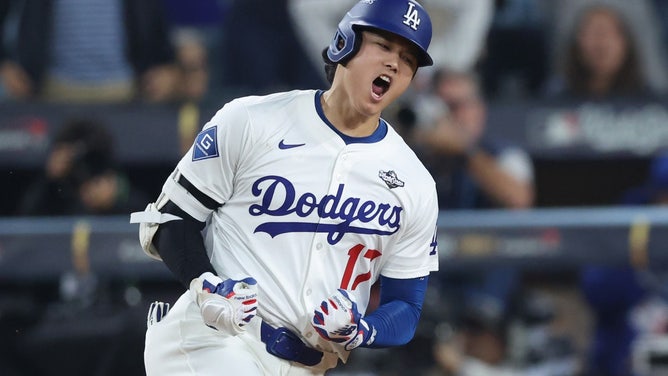
Los Angeles Dodgers designated hitter Shohei Ohtani. (Mandatory Credit: Kiyoshi Mio-Imagn Images)
Dodgers World Series Odds Are Comically Low
Fangraphs hosts the ZiPS projection system, created by baseball analyst Dan Szymborski. Each year, ZiPS projects season-long performance for all 30 teams, based on projected playing time and overall performance. These projections are some of the most accurate in baseball, with Szymborski writing that, "Over the last decade, ZiPS has averaged 19.1 correct teams when looking at the Vegas preseason over/under lines."
That's excellent, considering Vegas sports books rely on accuracy to stay in business.
This week, he posted ZiPS updated projections for the 2026 season, which include the probability of winning the World Series. And while the Dodgers do have the highest odds of any team, at 18.2%, that means the rest of the league has an 81.8% chance of winning. Welcome to Major League Baseball.
Even with the Dodgers' financial might, their win-loss projection is just 96-66, with a 68.9% chance of winning the NL West. For context, the Brewers won 97 games in 2025. Projection systems are by nature more conservative, but as one of the most accurate models out there, 96 wins does not exactly scream "shut the sport down."
LA does have a 91% chance of reaching the postseason, the highest in the league. But even that demonstrates just how much randomness is involved in winning the World Series. It's a near-certainty the Dodgers make the playoffs and secure a bye into the NLDS. And even with those advantages, with superstars like Shohei Ohtani and Yoshinobu Yamamoto and Freddie Freeman, there's an 82% chance some other team wins the World Series.
What fans can't accept is that randomness, chance, variance, and injuries play a much larger role in who wins a championship than sheer talent or money. It's why the Mets haven't won a World Series in the Steve Cohen era, let alone played in one, despite their exorbitant payrolls. It's why the Yankees haven't won a World Series in 17 years, despite routinely running the highest payrolls in the sport. Put differently, there's a better chance that a team from the AL East, any team, wins the World Series than the Dodgers. Same with the NL East.
The Dodgers have used their money to give themselves a very strong likelihood of reaching the playoffs. What happens after that is almost entirely unpredictable — a coin flip. Doesn't seem worth losing an entire baseball season over, especially when the NFL's competitive balance, with a salary cap, is a complete farce. But then again, since when have outcomes mattered?