YouTube TV Vs. ESPN: YouTube TV Doesn't Have Nearly The Leverage It Thinks
The longer YouTube TV operates without ESPN, the more likely it is that sports fans will transition to one of the Disney-owned services, be it Hulu + Live TV, Fubo, or the standalone ESPN service.
As of publication, YouTube TV subscribers do not have access to any Disney-owned networks, including ESPN and ABC.
Google's YouTube TV removed all Disney channels from its platform late Thursday night after the two companies failed to reach a new carriage agreement. The blackout is notable for sports fans ahead of Week 10 of the college football season and the Monday Night Football matchup between the Cowboys and Cardinals.
In response, ESPN has enlisted several of its top personalities—including Stephen A. Smith, Scott Van Pelt, and Mike Greenberg—to urge subscribers to pressure Google into accepting Disney's offer.
"Unfortunately, Google’s YouTube TV has chosen to deny their subscribers the content they value most by refusing to pay fair rates for our channels, including ESPN and ABC," Disney said in a statement Thursday night.
"Without a new agreement in place, their subscribers will not have access to our programming, which includes the best lineup in live sports—anchored by the NFL, NBA, and college football, with 13 of the top 25 college teams playing this weekend. With a $3 trillion market cap, Google is using its market dominance to eliminate competition and undercut the industry-standard terms we’ve successfully negotiated with every other distributor. We know how frustrating this is for YouTube TV subscribers and remain committed to working toward a resolution as quickly as possible."
Historically, disputes of this nature are resolved quickly, often before the first NFL game affected by a blackout. Thus, it is likely that Disney and Google will reach an agreement by Monday. Based on precedent, Google is the more likely party to make concessions.
YouTube TV has faced frequent carriage disputes in recent months. It was in conflict with Comcast in September and with Fox in August. In both instances, YouTube TV ultimately reached agreements on the networks’ terms.
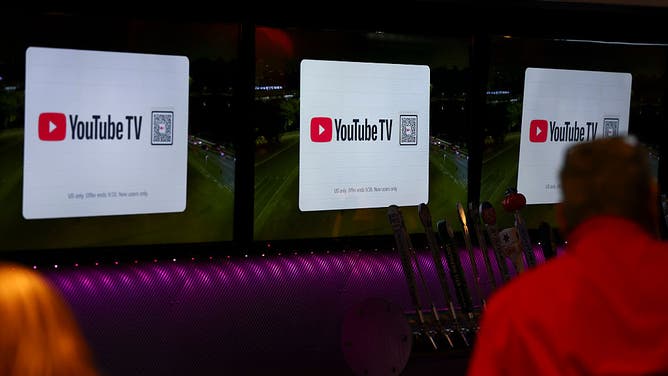
BUFFALO, NEW YORK - SEPTEMBER 05: Bar patrons watch the YouTube TV telecast of the game between the Kansas City Chiefs and the Los Angeles Chargers on September 05, 2025 in Buffalo, New York. (Photo by Aaron M. Sprecher/Getty Images)
Despite its roughly 10 million subscribers, YouTube TV’s leverage in these negotiations is limited. Its customers pay on a month-to-month basis rather than signing long-term contracts, making it easy for them to switch to competitors such as Hulu + Live TV or Fubo — both of which will fall under Disney’s control by early 2026.
While Disney aims to keep its networks on YouTube TV, the company understands that sports viewers are adaptable. If they lose access to major events like the NFL or college football, many will migrate to other streaming options. Disney also recently introduced a new direct-to-consumer ESPN service for $29.99 per month, providing full access to live ESPN programming without requiring a traditional television subscription.
The longer YouTube TV operates without ESPN, the more likely it is that sports fans will transition to one of the Disney-owned services, be it Hulu + Live TV, Fubo, or the standalone ESPN service.
Additionally, Disney and Fox now offer a bundle for $29.99 per month that includes ESPN’s direct-to-consumer platform and Fox One. The package provides access to ESPN networks, ABC, Fox, and FS1 — covering the NFL, college football, the World Series, the NBA, and the NHL.
For sports fans, that bundle presents a strong value proposition in the fall.
Still, the growing complexity of sports streaming is undeniable. A few years ago, fans could watch nearly all major leagues and nationally televised games through a single cable or satellite subscription. Today, they must juggle multiple services — including Amazon Prime Video, Netflix, and Peacock — and remain aware of potential network blackouts that can change from month to month.