Stephen A. Smith Learns The Limits of Liberal Tolerance After Jasmine Crockett Criticism
As Stephen A. Smith continues to venture into political commentary, he continues to learn the limits of liberal tolerance — or lack thereof.
Earlier this month, Smith criticized Rep. Jasmine Crockett (D-Texas), a progressive congresswoman known more for viral soundbites than legislative accomplishments. He questioned Crockett for prioritizing performative opposition to former President Donald Trump over helping her constituents, highlighting her recent comments calling Trump a "piece of s---."
"How Jasmine Crockett chooses to express herself, I’m like, ‘Is that going to help your district in Texas?’" Smith said on his SiriusXM radio show. "Aren’t you there to find a way to get things done, rather than just being an impediment to what Trump wants? How much work goes into that?"
Smith says his criticism prompted backlash from several "black media" figures. Podcaster Willie D accused Smith of "betrayal," while Black Lives Matter activist Tamika Mallory claimed he "disrespected a powerful black woman," called his remarks "dangerous," and urged listeners to "turn him off."
Smith pushed back. "You want me canceled because I asked a question?" he said. "Jasmine Crockett, how is that going to work for you and your constituency?"
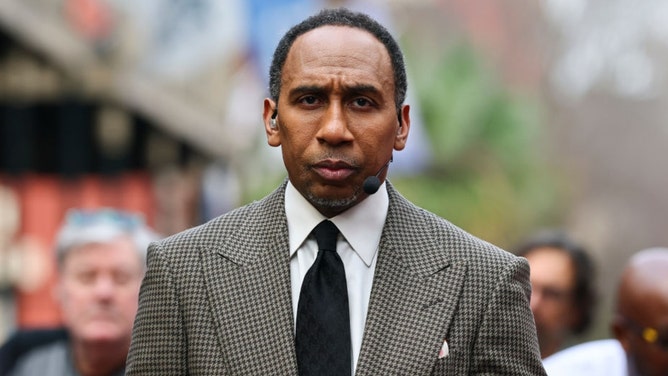
(Photo by Aaron M. Sprecher/Getty Images)
To his credit, Smith didn’t back down this time. Last year, he apologized to the "black community" after citing a study about black men’s voting trends in relation to Trump, saying his comments were "taken out of context." It was unclear how referencing a statistical study required an apology, but at least Smith held firm this time around.
Criticizing Crockett isn’t "disrespectful" or a "betrayal" of black women. That argument reflects a mindset of racial idolatry — the belief that certain individuals are above reproach because of their identity. If Crockett can’t handle fair criticism, she has no place in public office.
The reaction to Smith’s comments also further underscores a double standard: some in the media believe even mild scrutiny of a black public figure is unacceptable. Had Smith made the same remarks about a white politician, few would have objected.
Interestingly, Smith has at times echoed this same mindset, attributing criticism of black athletes or coaches to racial bias. Perhaps now he understands how such logic collapses after it was applied to him.
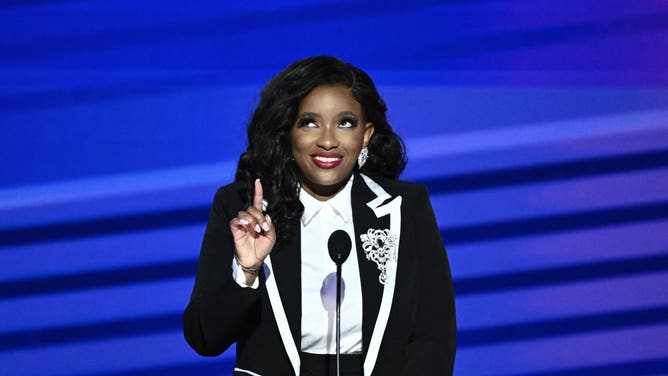
US Representative Jasmine Crockett, Democrat from Texas, speaks on the first day of the Democratic National Convention (DNC) at the United Center in Chicago, Illinois, on August 19, 2024. Vice President Kamala Harris will formally accept the party's nomination for president at the DNC which runs from August 19-22 in Chicago. (Photo by Mandel NGAN / AFP) (Photo by MANDEL NGAN/AFP via Getty Images)
As for Crockett, her defenders should get used to critical coverage. There is no more radical member of congress than Crockett, aside from maybe Rashida Tlaib. Last month, Crockett claimed that "only white supremacists" feel safe in America.
"I don’t know who feels safe in this country, except for the white supremacists," Crockett said. "I, specifically, as a black woman, definitely don’t feel safe."
She went further, insisting "the vast majority of threats are coming from right-wing extremism."
Well, that statement is simply not true. According to official FBI data, black men commit 55% of all murders while making up just 6% of the population. Black Americans are three times more likely to kill a white person than the reverse. Finally, black-on-white murders have spiked dramatically since 2020, when Democrats began aggressively pushing the "supremacy" myth.
So, uh, yeah, white supremacy isn't exactly the issue. Let's see if Stephen A. Smith dares to challenge Crockket and his supporters on this topic.
He's going to end up apologizing instead, isn't he?