Minneapolis School Closures Put The 'Quit' In 'Equity' | Erika Sanzi
Public schools are not supposed to be protest tools.
When Minneapolis Public Schools announced it would cancel classes for the rest of the week following the fatal shooting involving an ICE agent, the district once again demonstrated how quickly student needs fall to the bottom of the priority list. Framed as a precautionary safety measure, the decision was neither thoughtful nor defensible. It was political — and it came at the expense of tens of thousands of students who can least afford yet another disruption in their schooling.
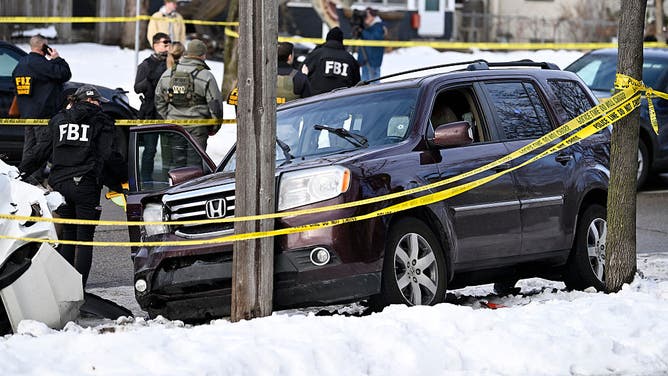
Members of law enforcement work the scene following a suspected shooting by an ICE agent during federal law enforcement operations on January 07, 2026 in Minneapolis, Minnesota. (Photo by Stephen Maturen/Getty Images)
The message from the school read in full:
Out of an abundance of caution, there will be no school on Thursday, Jan. 8 and Friday, Jan. 9 due to safety concerns related to today’s incidents around the city. All MPS-sponsored programs, activities, athletics and Community Education classes, including adult education, will be canceled. The district will not move to e-learning because that is only allowable for severe weather.
MPS will continue collaborating with the City of Minneapolis and other partners on emergency preparedness and response.
Photo: Getty Images
Despite a 15 percent drop in enrollment since the pandemic, Minneapolis Public Schools still serves roughly 29,000 students across 98 schools. For no justifiable reason, the district eliminated two full days of instruction for everyone because of one shooting on one street in one neighborhood in a school district that covers 60 miles. The message, once again, is unmistakable: Educating the children of Minneapolis is not a priority. Instead, city leaders routinely use students (and by extension, their families) as convenient pawns in the only thing they seem to care about: waging war with the Trump administration and fanning the flames at every turn.
Minneapolis Public Schools has persistently low academic performance. The district has spent years acknowledging — and promising to address — weak reading and math outcomes, particularly among its most vulnerable students. With only 44 percent proficient in reading and 39 percent proficient in math, these are not abstract challenges. And by closing schools this week, city leaders have, once again, given the proverbial middle finger to the city’s students and their parents.
Minneapolis students have already lost far too much instructional time in recent years and the educators are still grappling with the consequences. District leaders know this. Yet when faced with a high profile incident and performative histrionics from leaders who fail to meet the moment, they defaulted to what has become their reflexive response: close the schools, education be damned.
Photo: Getty Images
What makes this decision worse is that Minneapolis did not even attempt to preserve continuity through e-learning. District officials explicitly stated that there would be no remote instruction during the closure. For a district that routinely describes learning loss as an emergency, the contradiction is glaring, though increasingly predictable.
And instruction and stability are not the only things that vanished. As of now, Minneapolis Public Schools has not publicly posted any information indicating that meals will be provided to students during this unexpected closure. The cognitive dissonance is hard to ignore: the leftists who usually can’t shut up about the importance of school meals, are conspicuously silent now.
These closures are political and self-serving because they free up time and emotional bandwidth for adults in the system, including educators who may wish to protest ICE or, God forbid, use their vehicles to block roads and impede law enforcement. Teachers, like all citizens, have the sacred first amendment right to express their views. But public schools are not supposed to be protest tools. When schools close in response to political spasms and incendiary leaders, students are betrayed.
Minneapolis leaders frequently invoke equity as a guiding principle. Welp, they sure put the "quit" in "equity" when they treat instructional days (and school lunch!) as expendable. But equity never means treating instructional days as expendable. It means protecting them fiercely, especially for students who struggle academically and have already lost so much. Stability, routine, and time in class should not be considered luxuries but, in deep blue cities like Minneapolis, they increasingly are.